

Beyond the national borders
In November 2023, swisstopo opened its doors to the Vice Chairwoman of the National Boundary Commission at the Ministry of Foreign Affairs of Vietnam. Mrs Nguyen Thi Huong was accompanied by a delegation of specialists in border issues.
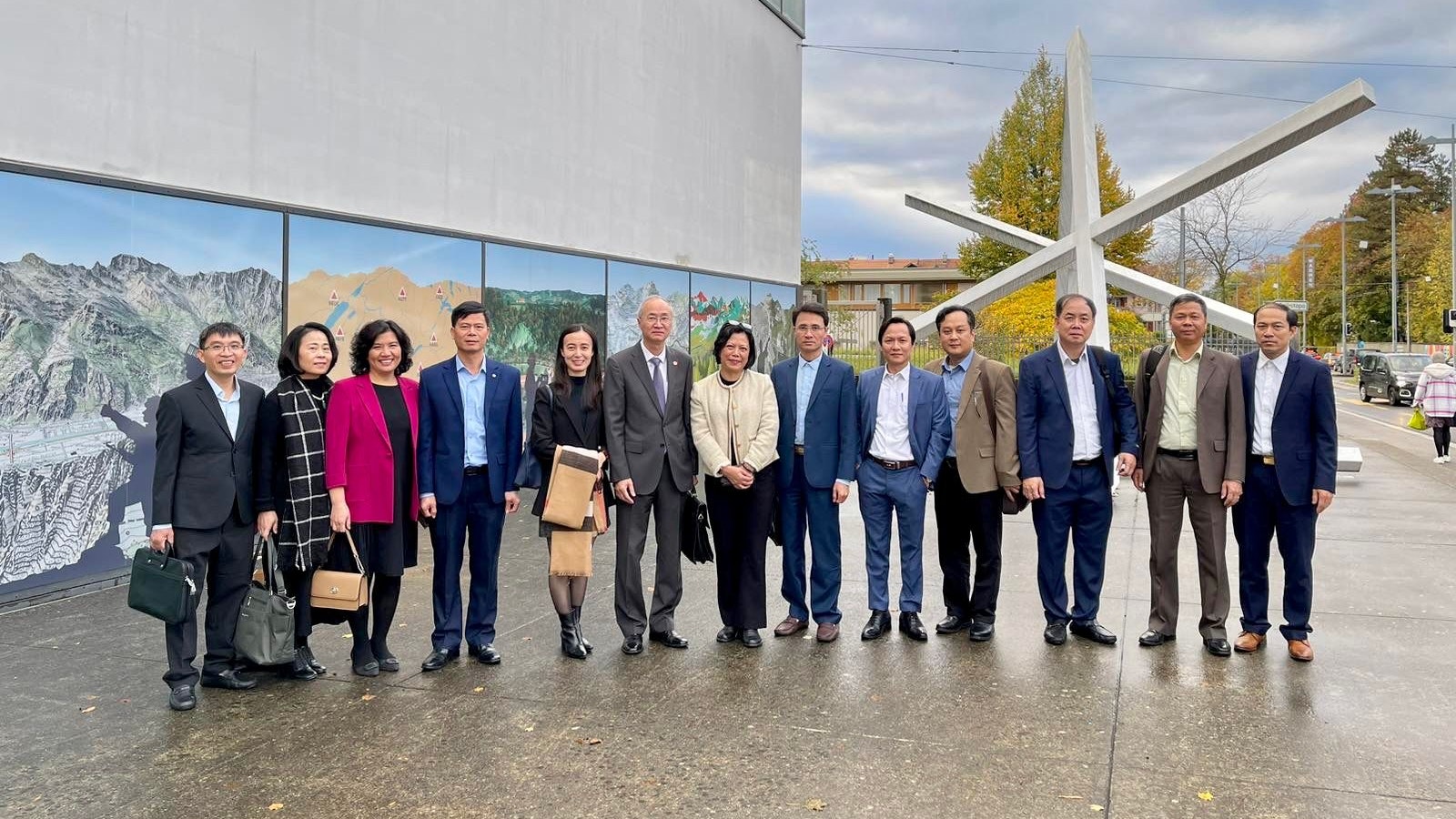
Why did you arrange a working session with swisstopo during your visit?
Nguyen Thi Huong: Over the years, Vietnam has gradually engaged in exchanges and negotiations for the planning, demarcation, and marking of land border with its neighbouring countries. Currently, Vietnam and its neighbours prioritise promotion of border management along with development cooperation in border regions. We wanted to gain insights and knowledge from swisstopo’s experiences.
What did you learn from this working session and what findings will you take back with you?
Nguyen Thi Huong: The activities of swisstopo share certain similarities with the tasks of our National Boundary Commission. We are particularly impressed with Switzerland’s extensive network of boundary markers and border delineation which ensure clear and easy recognition of the borderline’s position on the ground. Furthermore, the data are documented and managed with the aid of advanced technologies, which simplifies their administration and use. I am thinking in particular of the border coordinates and the maps, which are synchronised in the framework of the national geographic information system and with the harmonised geodetic reference system used throughout Europe. We appreciate swisstopo’s exchange and coordination mechanism with neighbouring countries to monitor and evaluate the stability of the border markers’ system and the terrain where the border passes. This is indeed a useful and highly relevant subject for us to research. Finally, swisstopo’s official basic geodata system is a further interesting example for developing a similar database focused on Vietnam’s territorial borders.
What are your personal experiences concerning negotiations on border issues with neighbouring countries?
Nguyen Thi Huong: Territorial and border-related issues are a sacred and vital issue for every country and its people. National boundaries issues are often very diverse, and involve functions and tasks of various ministries and authorities. I have already participated in and led numerous border negotiations with our neighbouring countries. Therefore, I am mindful that this is a truly demanding and intricate task. The negotiator, once engaged in negotiations, regardless of man or woman, will steadfastly safeguard the interests of their nation and people. I believe that the chief negotiator, in addition to having unwavering determination and persistence, must have the ability to be tender and agile to ensure negotiation’s right direction and attain deliverables for their national best interests.
There were several women in your delegation. How do you foster equality between women and men within your organisation?
Nguyen Thi Huong: At the National Boundary Commission – Ministry of Foreign Affairs of Vietnam, women make up for approximately 40 per cent of the total number of employees. In recent years, the Ministry of Foreign Affairs has created favourable settings for women to have greater educational opportunities and hold more important positions in leadership and management. Currently, the ratio of women in the leadership at the National Boundary Commission is nearly 30 per cent. I am the first Vice Chairwoman of the Commission since its establishment in 1975. This is a truly remarkable achievement, reflecting the collective efforts from both the organisation and each individual, especially woman officers. In the coming time, we will continue to create favourable conditions, foster and provide new opportunities for women, not only to train the next generation of woman leaders, but also for each woman officer to have access to opportunities for individual development, education, and enjoy happiness in both their professional and personal lives.
Vietnam
Vietnam is a country in Asia with an area of 330,000 km² and a maritime zone encompassing almost 1million km². Its national borders cover more than 5,000 kilometres and are shared by the People’s Republic of China to the north, the Lao People’s Democratic Republic to the west and the Kingdom of Cambodia to the south-west
This is a condensed version of the interview. The full version can be viewed here.
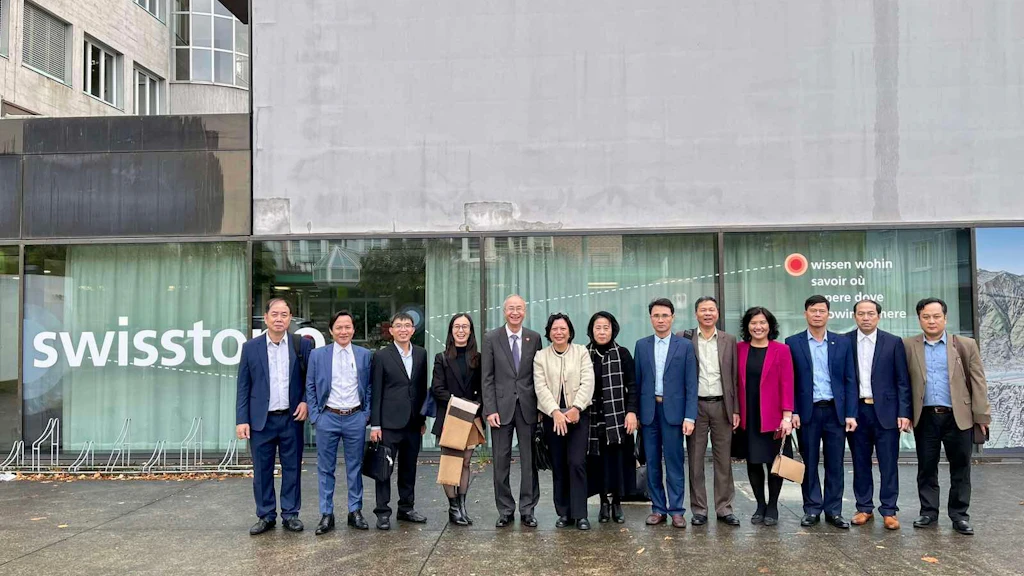
Beyond national borders
In November 2023, swisstopo opened its doors to the Vice Chairwoman of the National Boundary Commission at the Ministry of Foreign Affairs of Viet Nam. Mrs Nguyen Thi Huong was accompanied by a delegation of specialists in border issues. Interview.
More information
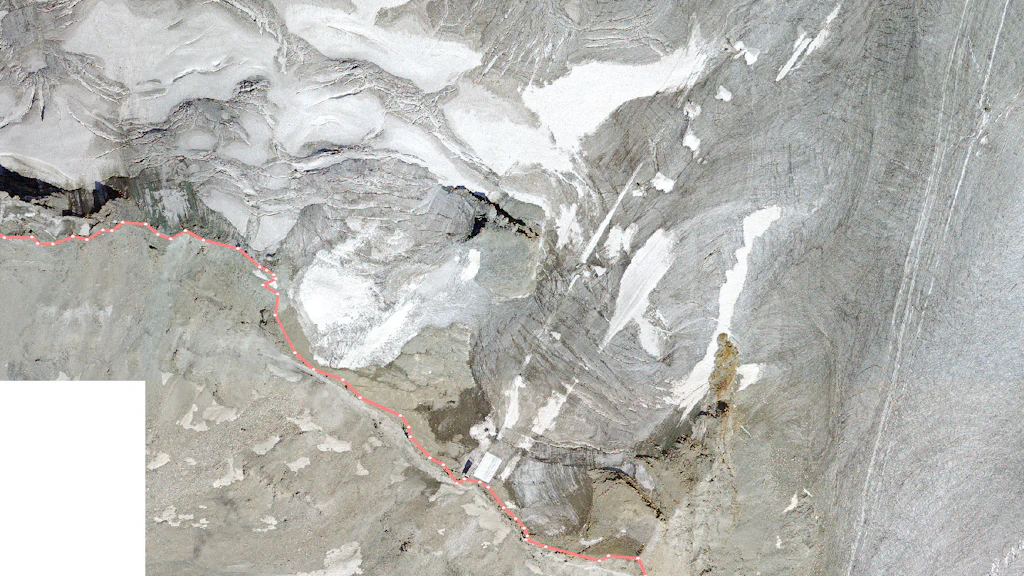
National borders of Switzerland
Switzerland’s national border is formed by the external boundary of its sovereign territory. It is specified, surveyed and maintained in close cooperation with the five neighbouring countries.

Focus on women
Women have been working in technical professions, geoinformatics and, namely, the field of geoinformation for a long time now. So we choose to turn our attention to the women in our federal office.
Federal Office of Topography swisstopo
Seftigenstrasse 264
3084 Wabern