

After obtaining a doctorate: entering the non-academic labour market
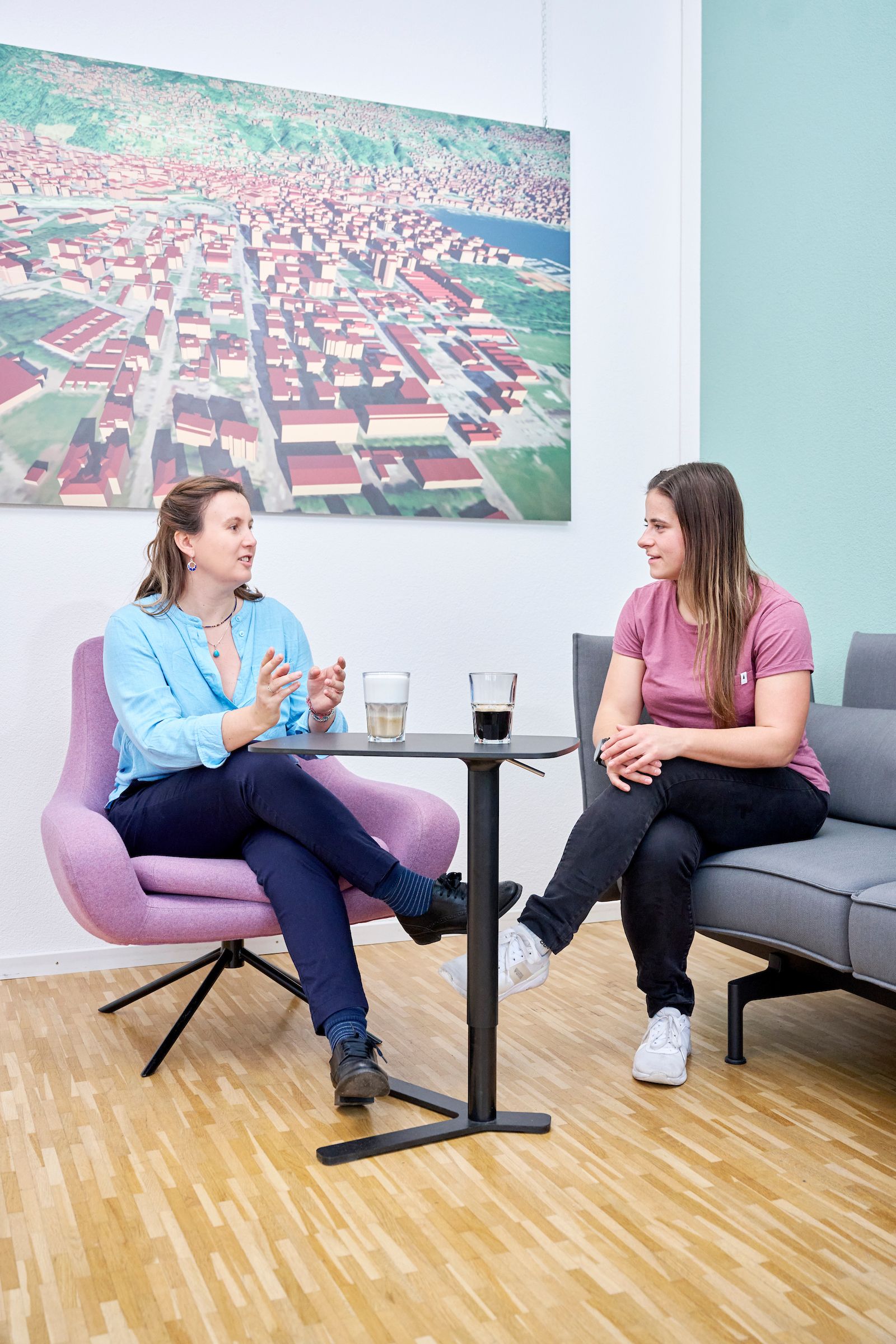
Camille Litty and Joan Sturm both chose to study for a doctorate. Today they are employed by swisstopo. They have returned to the business world after completing their high-level studies. Joint interview.
.jpg?rect=0%2C812%2C1600%2C900&auto=format)
Joan Sturm and Camille Litty, you both joined swisstopo in 2023. Why did you decide to leave the academic world?
Camille Litty: After I obtained my Master’s, I worked on a dissertation concerning terrain models based on satellite images. I then remained in the academic world, initially as an assistant professor, and subsequently in a post-doctorate position. However, I did not want to pursue a career in research and wished to find a job with a certain degree of stability. I was more interested in managing technical projects. And I soon found a perfect opportunity: swisstopo is renewing its production systems, in particular by acquiring new cameras for the purpose of collecting aerial images. This is something that is close to my field of research, and I am now very much enjoying my involvement in the management of this project.
Joan Sturm: It was a colleague who told me about my current position. I hadn’t yet completed my dissertation, but the opportunity of a stable job that is closely associated with my research subject was unlikely to present itself twice. I work 80 per cent, which allows me sufficient time to compile my material and prepare the defence of my dissertation. The topics overlap, and this enables me to intensify certain aspects. And I also appreciate the fact that I can visualise specific examples of my work. I already realise that the pressure that arises from the requirement to publish scientific research material no longer applies to the products and data we supply to our partners.
In what way is your academic background a strength today?
Joan Sturm: Studying for a doctorate is above all a matter of perseverance. You have to remain focused on the same subject for a long time. I’ve been working on my dissertation for five years. To succeed, you have to develop other skills, such as the ability to grasp things in their entirety. You’re responsible for making progress with your work, i.e., you have to learn to weight the elements, evaluate the results and innovative solutions, and apply them to your particular context. In the end, those skills are more useful in the academic world.
Camille Litty: Yes, and I would add that you also develop organisational skills and the ability to coordinate. Today, this is what enables me to participate in a project and manage it, without necessarily being a specialist in the field concerned. I’ve learned how to identify good partners and integrate them into discussions. Together with these partners, I formulate a working methodology that facilitates the progress of the project at hand. In the course of our research work, we learn how to listen to different opinions in order to formulate assumptions. This enables us to respond to the needs and objectives of different players. When I look back, I regret not having taking account earlier of these acquired skills. When you focus so strongly on technical know-how, you tend to overlook the fact that these soft skills are essential in a variety of professions.
Joan Sturm: It is more difficult to refer to soft skills than to a degree. You’re right – that’s what makes us competitive on the labour market.
And what are the new challenges you now face?
Joan Sturm: I’m used to working autonomously and having full control of processes and deadlines. Here, however, the processes are more complex and involve more people or organisations. Let’s say I’m learning to be patient!
Camille Litty: For me, language is the main challenge. English is still the principal language within the scientific community, but today it is German that I have to use in my daily work. I’m investing a great deal in German courses, and I speak German as often as possible at work and at home. I’m also fortunate to be able to count on the support of my colleagues.
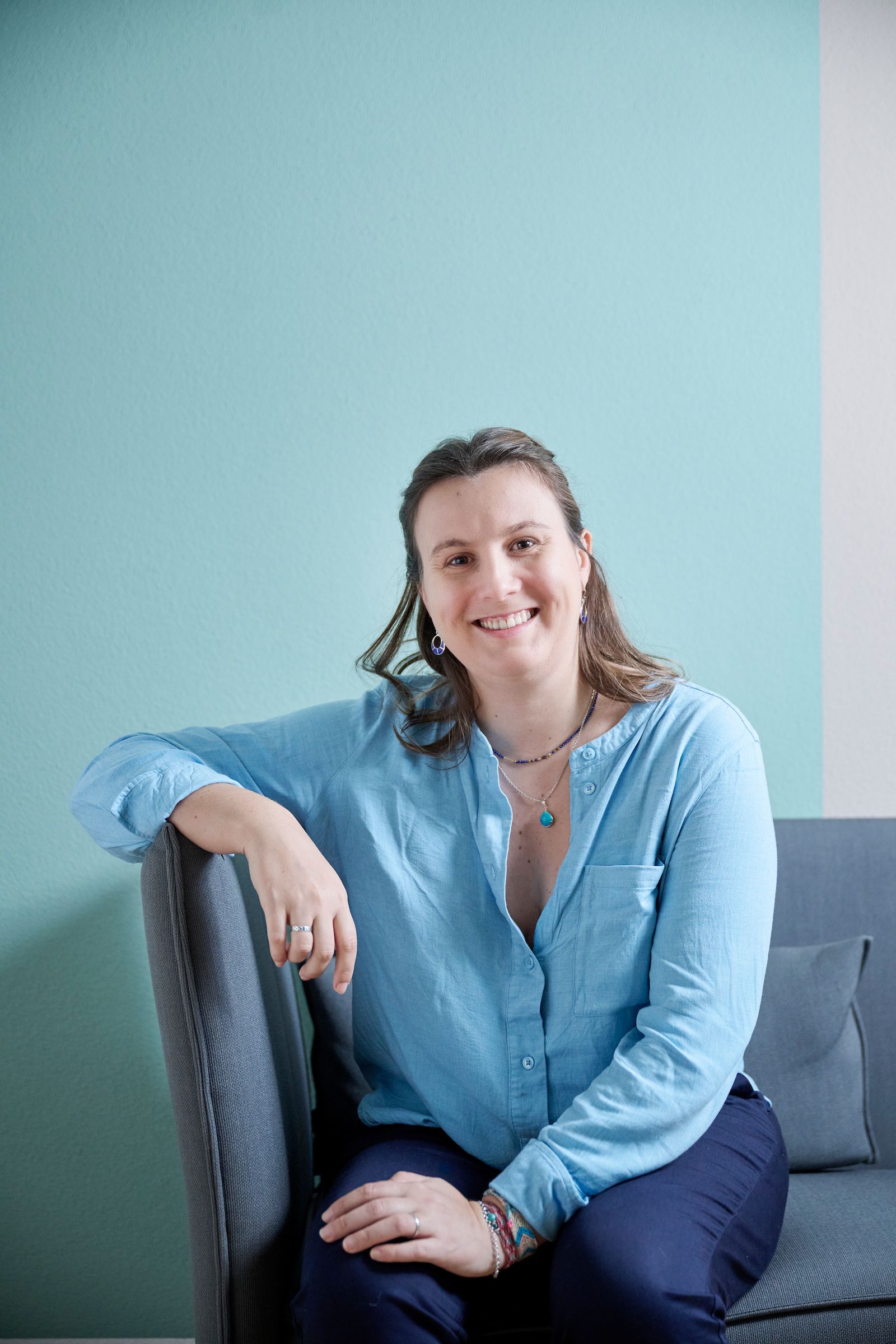
Portraits
Camille Litty
Joan Sturm

Federal Office of Topography swisstopo
Seftigenstrasse 264
3084 Wabern