Published on 2 May 2022

Treasures must be kept in safe hands

Nicole Jabrane and her team are breathing new life into the recorded history and development of Switzerland’s landscapes. As head of swisstopo’s image archives, her task is to ensure that valuable historical photos are preserved for future use.
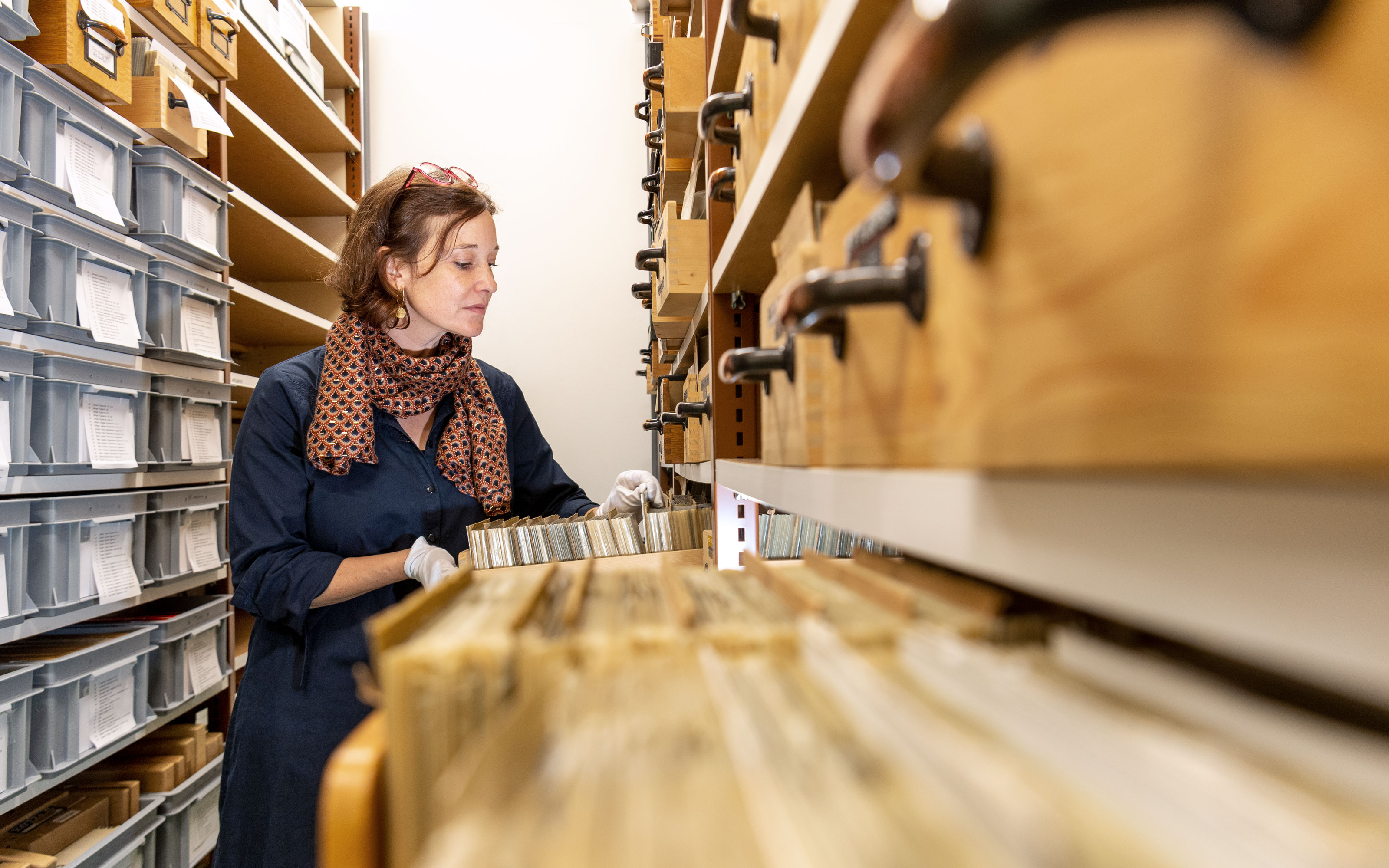
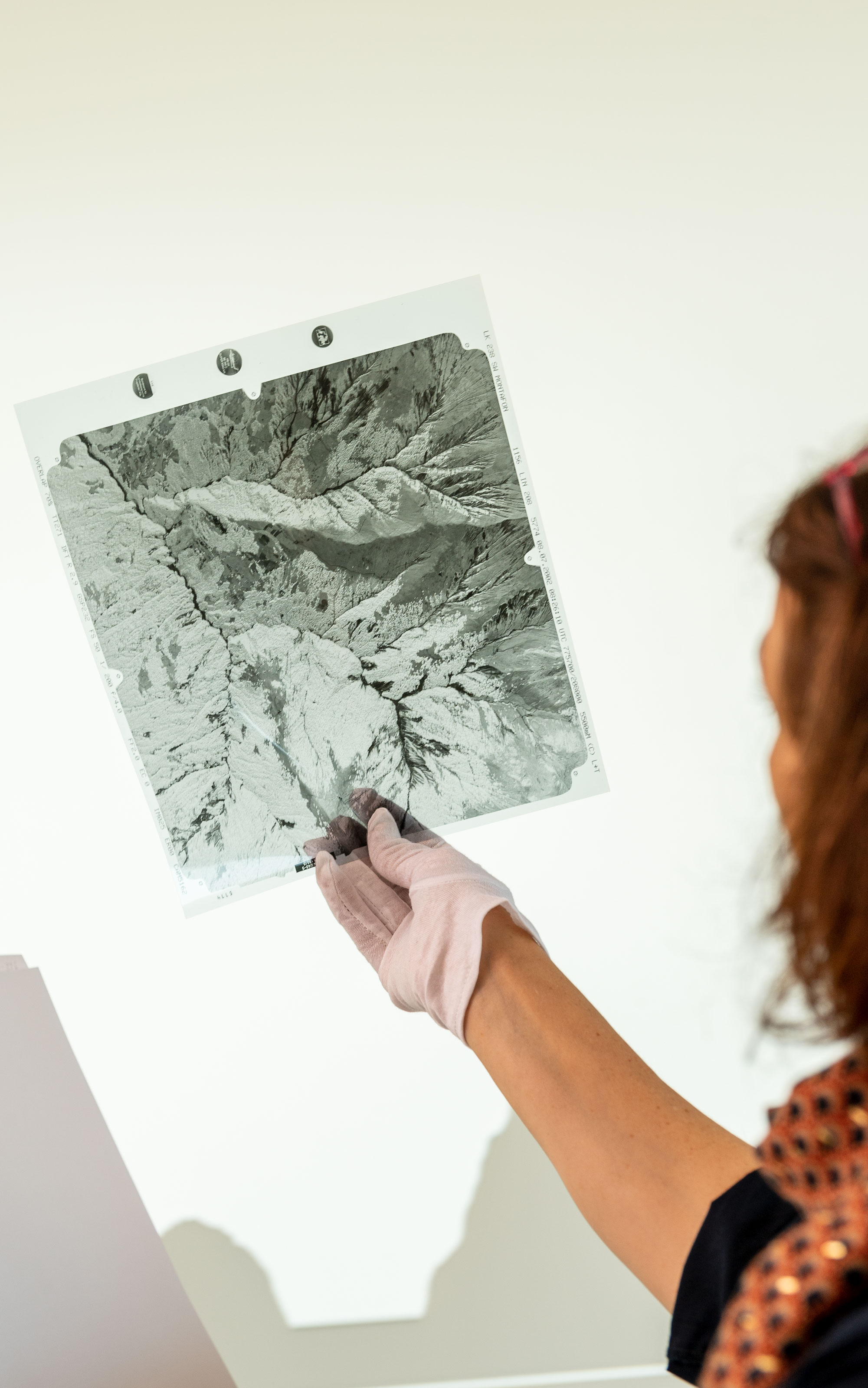
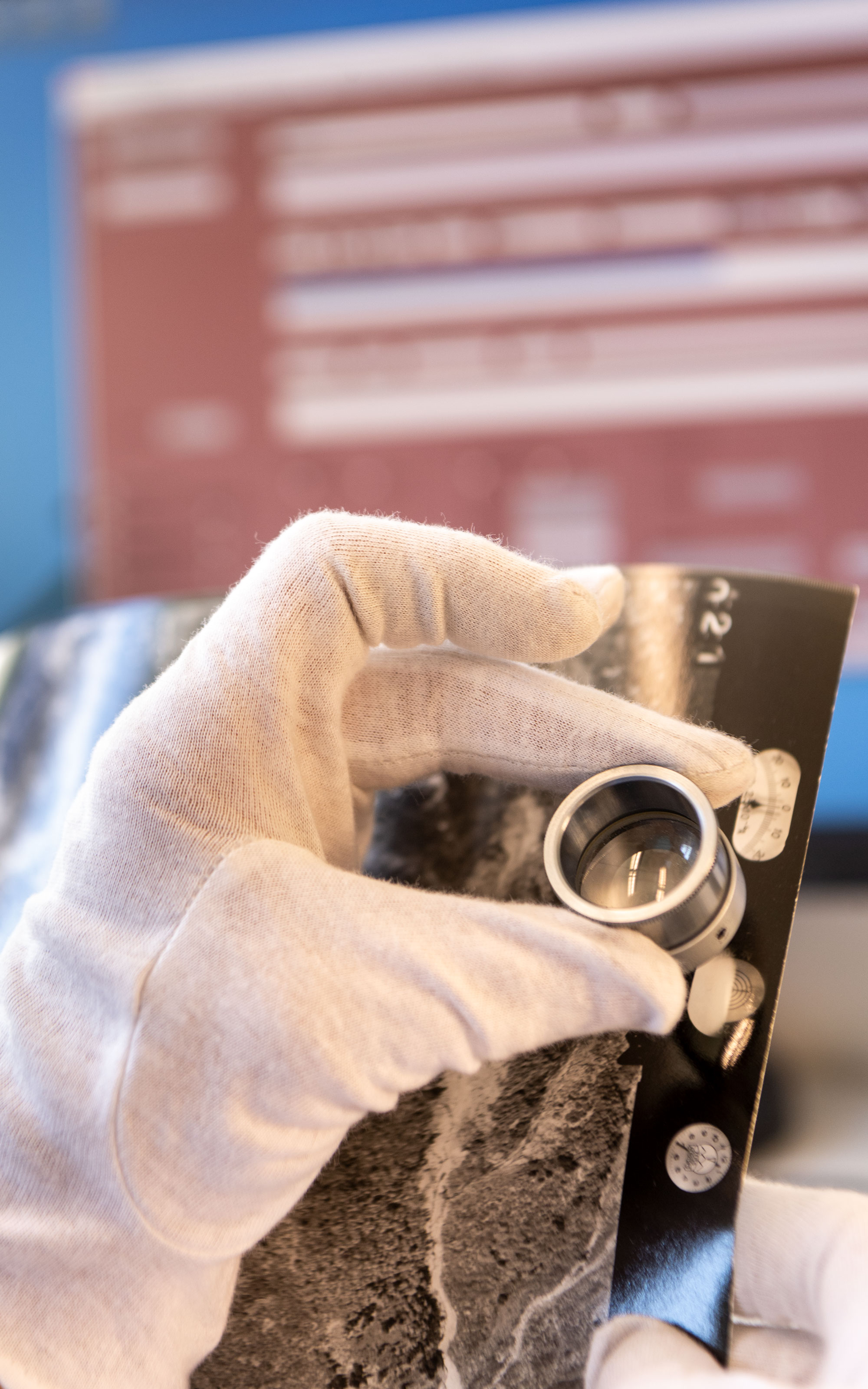
Schaffhausen, Glarus, Saas-Fee: these and numerous other locations can be discovered in swisstopo’s image archives. Around half a million photos taken by employees of the Federal Office of Topography since the end of the 19th century are stored in numerous wood and metal boxes in the archives. These photos primarily formed the basis for the production of the series of Swiss national maps. The archives contain images in analogue form that were produced in often challenging circumstances in the early days of the national survey. The majority are aerial photos taken by the swisstopo air services team since the 1920s. «These valuable images record the history and development of Switzerland’s landscapes,» says Nicole Jabrane. Together with her team, her task is to ensure that these unique images are carefully preserved for future use. Each analogue image is recorded and painstakingly cleaned and preserved by hand in what amounts to a rescue operation: «This process is crucial,» explains Nicole Jabrane, «since otherwise many of the images in the archives would soon be lost forever.»

Highly sensitive images

Nicole Jabrane, a conservation and restoration specialist, started work on swisstopo’s archives in 2010, shortly after the Federal Council had adopted an action plan aimed at preserving the collection of images. At this time, the images were kept unused in boxes and were becoming increasingly vulnerable. «Photos are much more sensitive than documents in paper form,» she notes. In the early days, glass plates or plastic film were used as media for recording images, but these have a limited lifetime: the less suitable the storage conditions, the faster the deterioration process.

Painstaking work

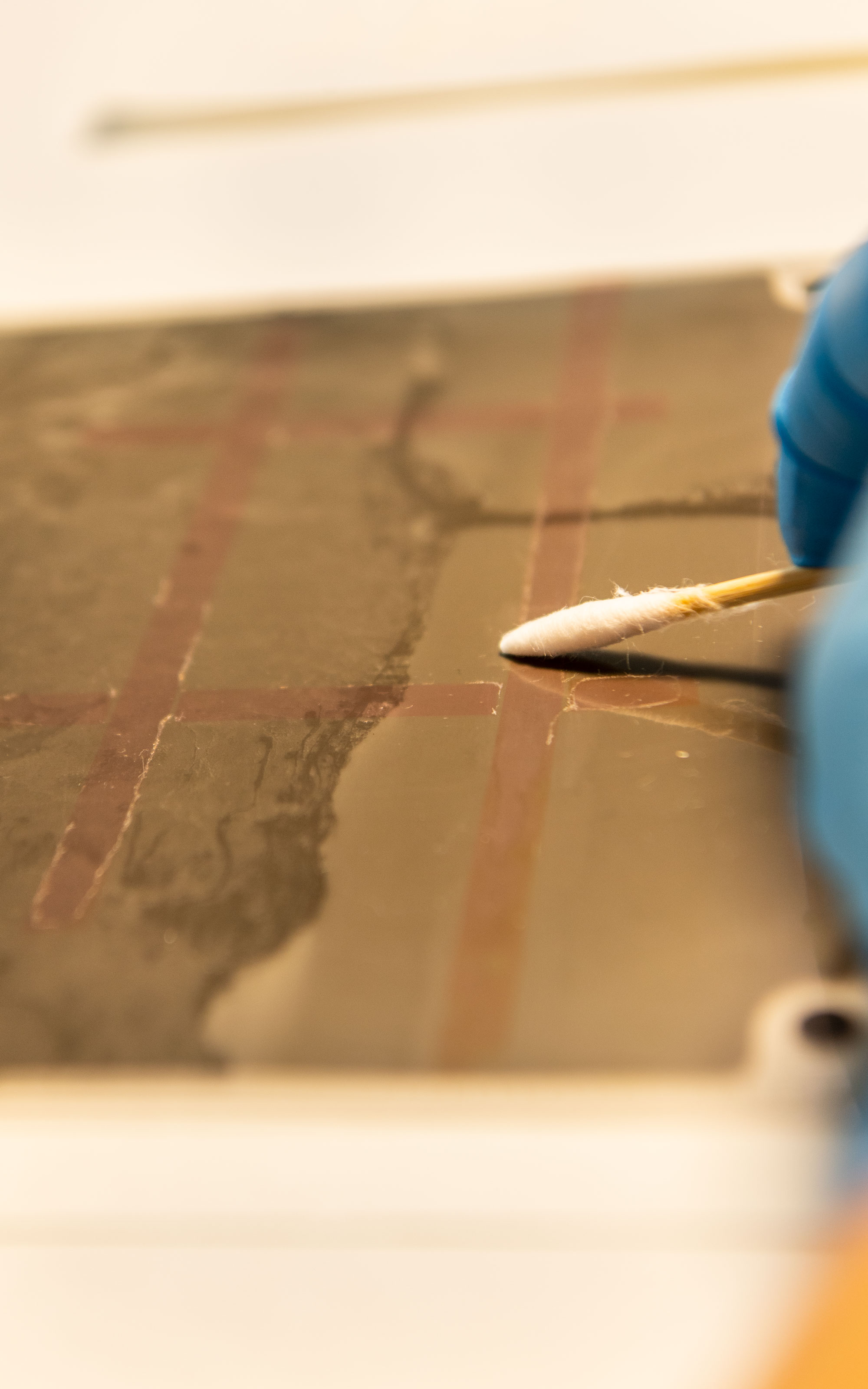
The process of conservation differs according to the utilised medium. For example, glass plates are cleaned using a fine goat’s hair brush and a special solvent. The team clean not only the original negatives, but also the paper prints. In other words, for each image, two items always have to be conserved. Initially it was not the oldest images that were processed, but rather those that were the most vulnerable: «We were able to rescue those images dating from the 1930s and ’40s, which were produced on the basis of plastic film, virtually at the last minute,» says Nicole Jabrane. «If we had waited another one or two years, most of these items would have been lost forever.» For this demanding task, she and her team need a great deal of skill and endurance, because processing these ageing materials calls for a high degree of care and precision.

Digitalisation
In order to make the entire collection of images accessible to the public, each photo has to be digitalised after it has been carefully cleaned and conserved. Each item is scanned and the corresponding image data are entered into a system conceived and developed by Nicole Jabrane together with IT specialists at swisstopo. «The form of interdisciplinary collaboration we pursue at swisstopo is essential for my work,» she says. For the preservation and presentation of the archived images, as well as for their future safekeeping, she and her team have to rely on state-of-the-art technology. And their preservation can only be assured if they are stored in sterile rooms at the required temperature and humidity levels.

Guardian of the photo archives

As the appointed «guardian» of swisstopo’s historical photo archives, Nicole Jabrane is highly protective of these «fragile media». The collection is extremely valuable: it depicts how Switzerland’s landscapes have changed over the course of time, and thus provides significant impulses for their future development. As head of the image archives team, Nicole Jabrane has to combine personnel, planning and organisational elements with practical conservation and restoration activities. «It’s a painstaking but rewarding task,» she says.

A journey through time

swisstopo’s collection of images comprises landscape photos, as well as documentary and technical photos. The process of input and digitalisation of the collection is already well advanced. swisstopo is making this valuable treasure trove accessible to everyone free of charge, for example in the form of a journey through time, as a mosaic and as a collection of single images.

Further information:

Federal Office of Topography swisstopo

Department Communication and Web
Seftigenstrasse 264
3084 Wabern