

Preserving the legacy of Switzerland’s landscapes
During the past 175 years, swisstopo has been documenting Switzerland’s topographic development. Lea Dauwalder is well acquainted with the diversity of this historical heritage. She is responsible for the restoration and conservation of swisstopo’s map collection – a manual task that calls for a great deal of precision and attention to detail.
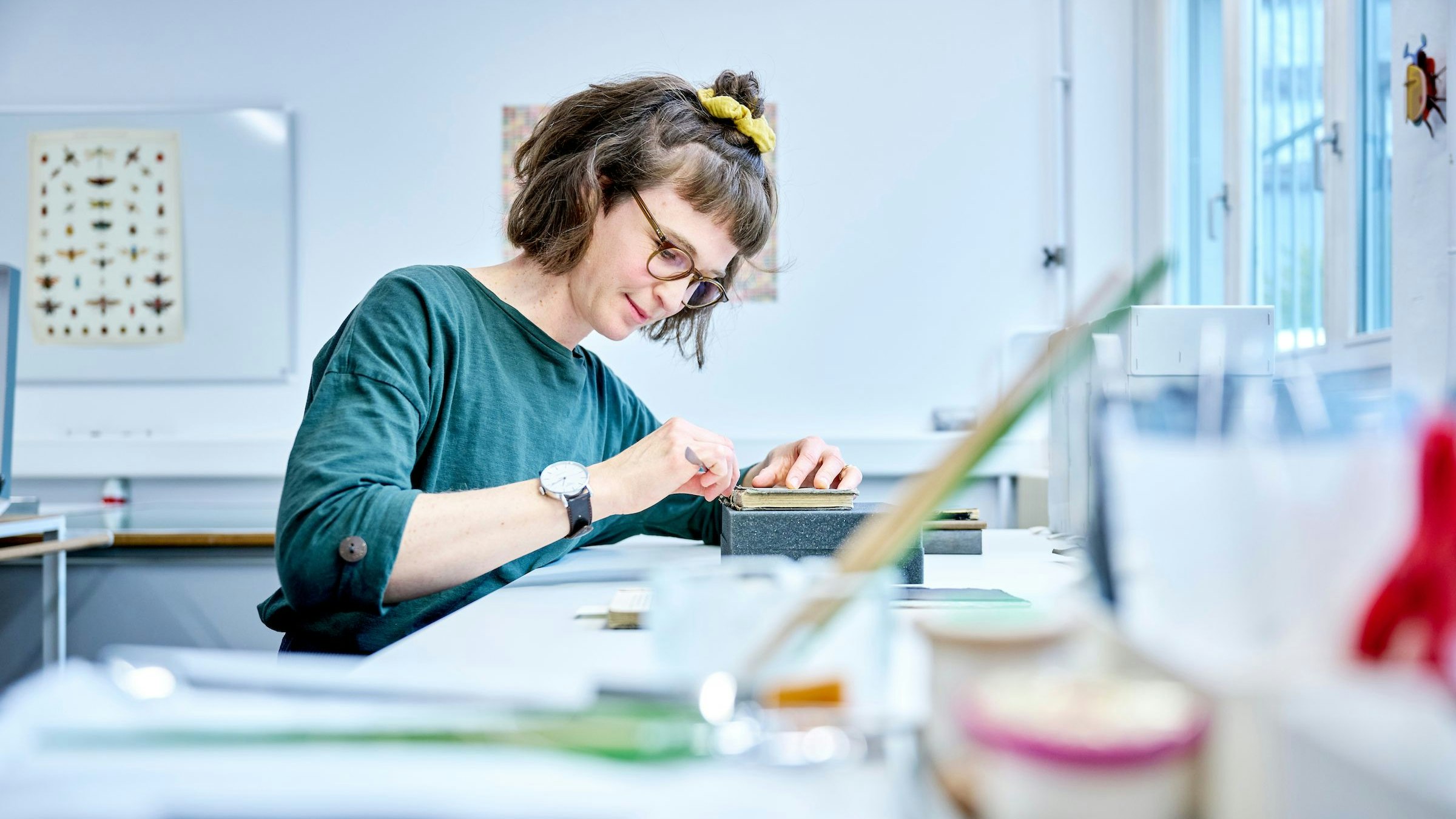
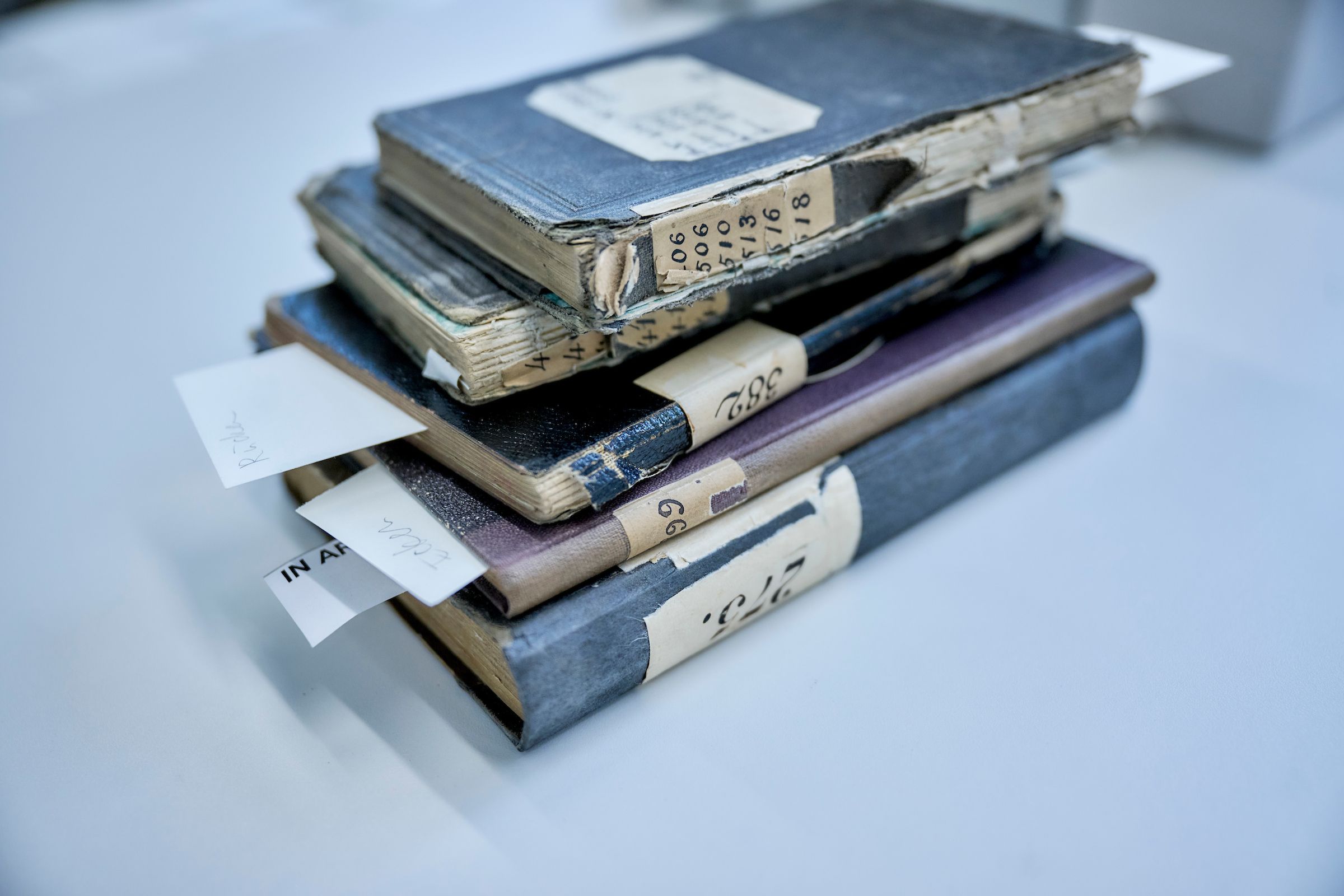
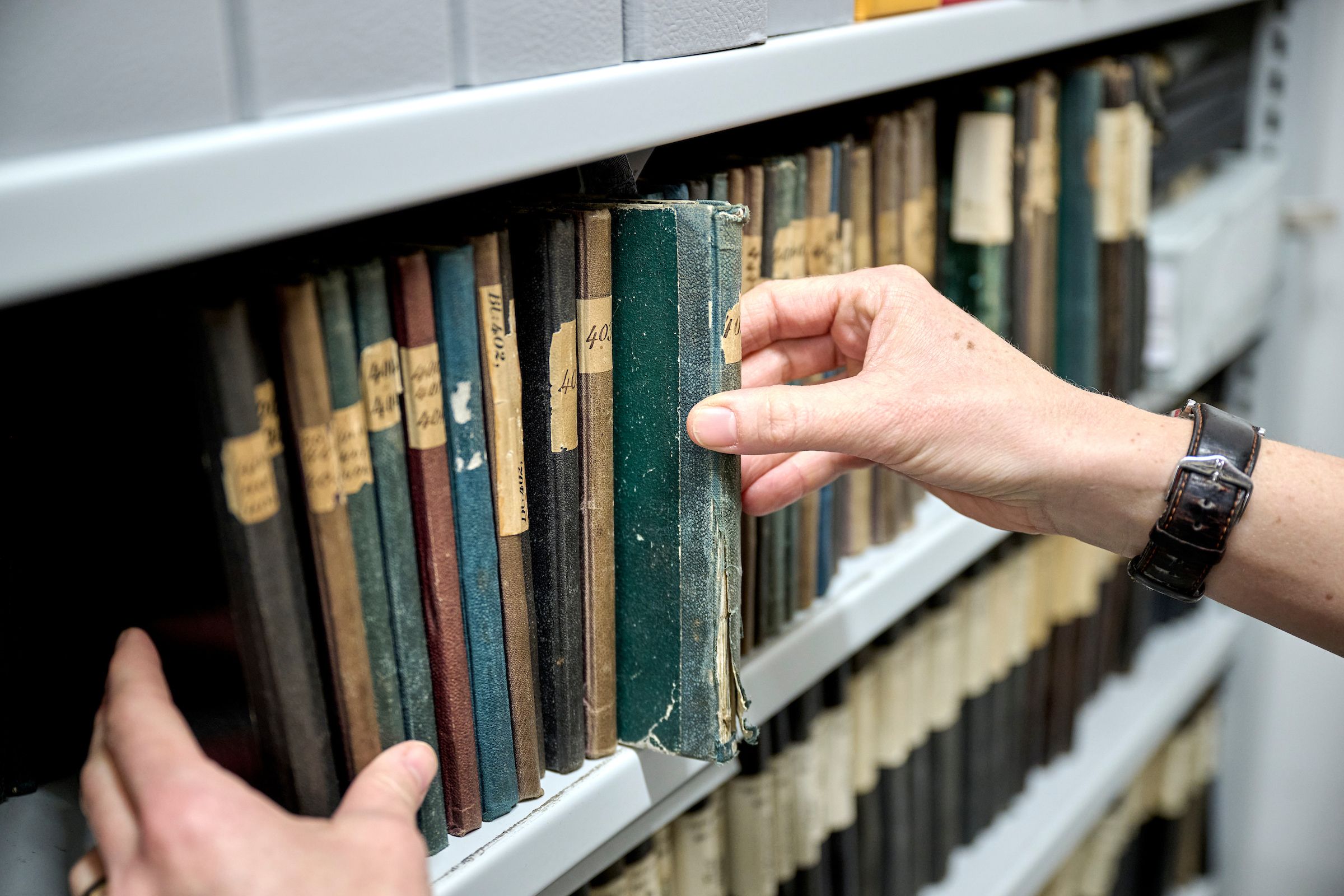
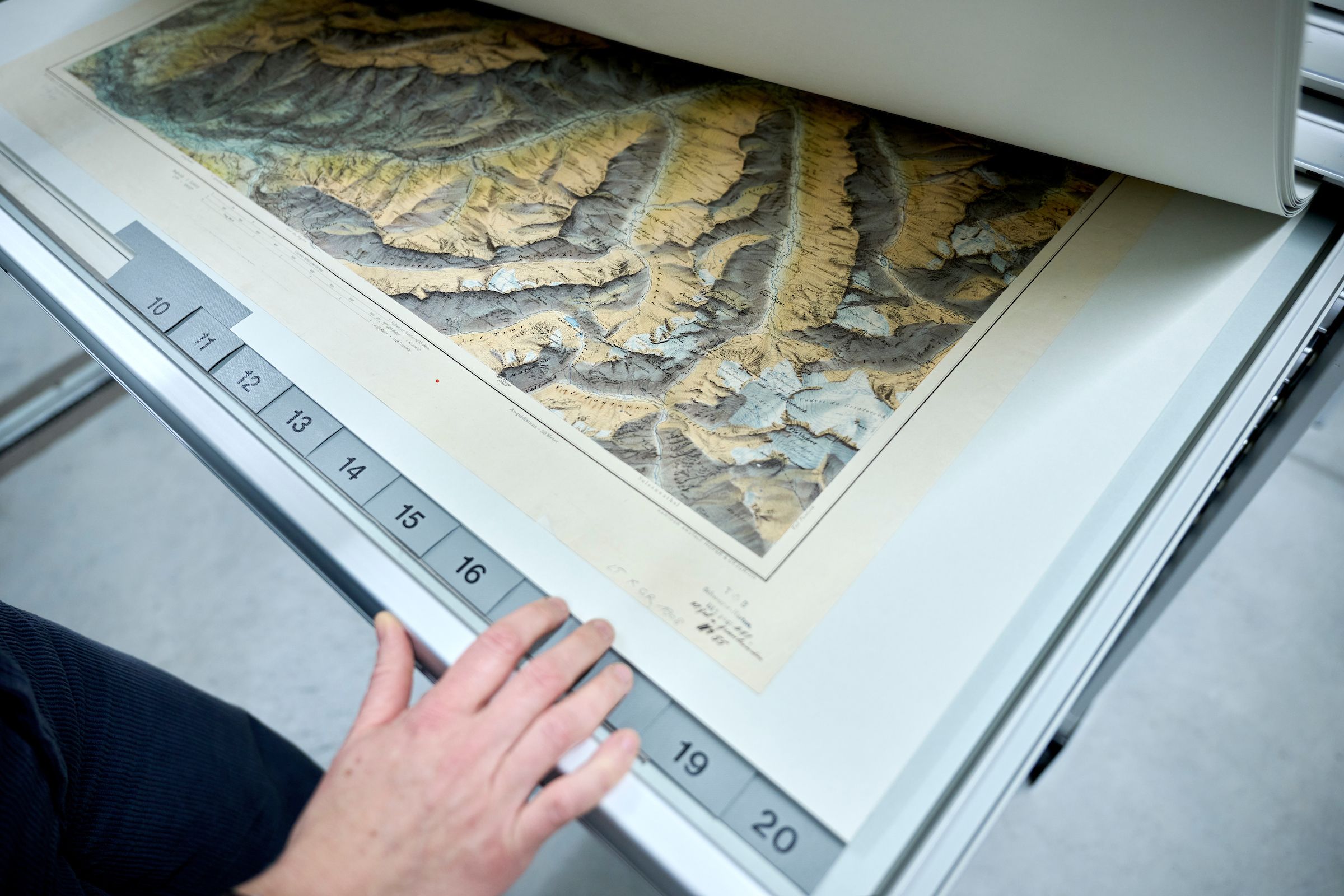
Since 1845, the Swiss Topographic Bureau – the forerunner of swisstopo – published the first series of official topographic maps of Switzerland. In the meantime, the collection has been constantly expanded and today swisstopo manages a comprehensive collection comprising maps and related objects, such as aerial photographs, copper plates and field booklets. «These items, which have been compiled over the course of time, constitute a valuable heritage,» explains Lea Dauwalder, who summarises her work as follows: «For the map collection, I ensure that these treasures of the past and the information they contain remain permanently accessible.» To accomplish this, she applies a variety of restoration and conservation methods.
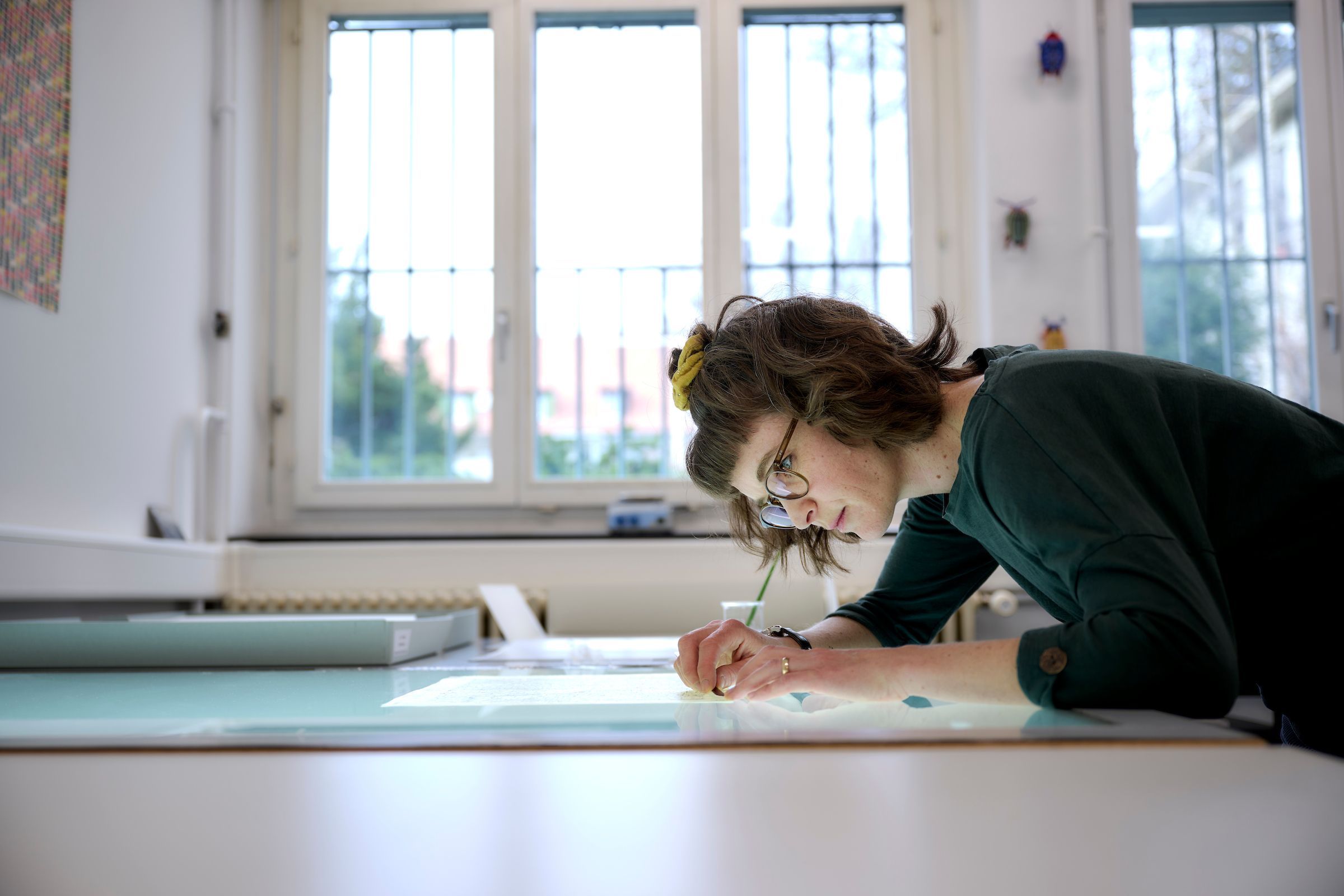
In a brightly lit and well-equipped studio, she restores each item to its full original splendour. Here, a map that has yellowed with age awaits restoration by Lea Dauwalder. And over there, tools that she has precisely arranged and positioned alongside a field booklet, the spine of which has been damaged. «I work with a very broad variety of items, so I need to be methodical!» she says, as she points out the various work stations in her studio.
I make sure that these treasures of the past and the information they contain remain permanently accessible.
Expert craftsmanship
She is currently working on early field booklets which contain information gathered by topographers from bygone eras. “First of all, I carefully clean each item, because dust and any forms of impurity have to be eliminated before restoration work can be carried out. With this booklet, I have to work on the back cover, where the leather is peeling off. I will also have to renew the binding, since the thread has become loose,” she explains, as she sits down at her desk. She describes the ethical stance that governs her work: «We have to make sure that the history of each object remains discernible. The original production methods have to remain identifiable. I don’t remove the original materials; I conserve them, enhance them and complete them where necessary.» She documents each restoration stage in a traceability procedure.
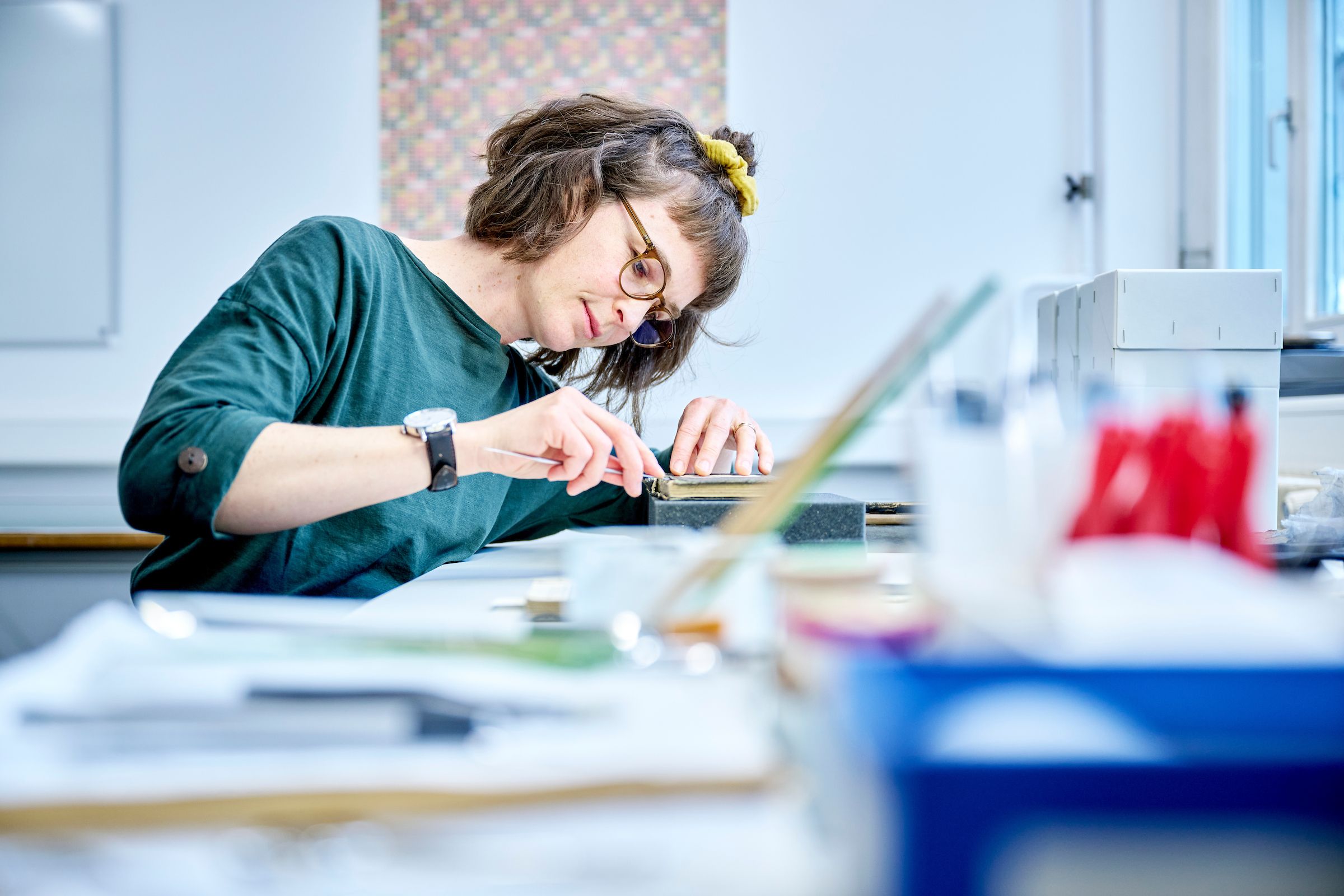
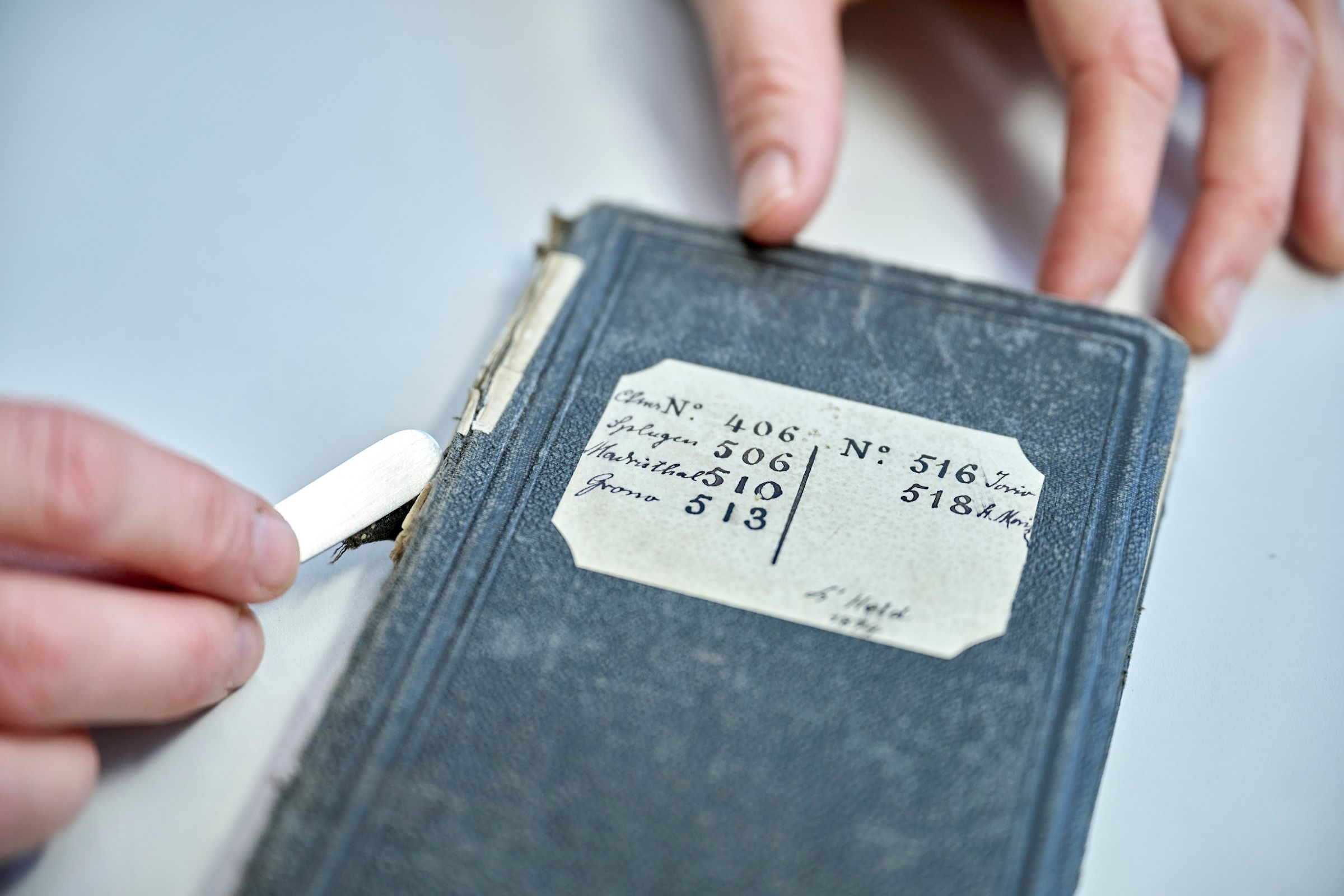
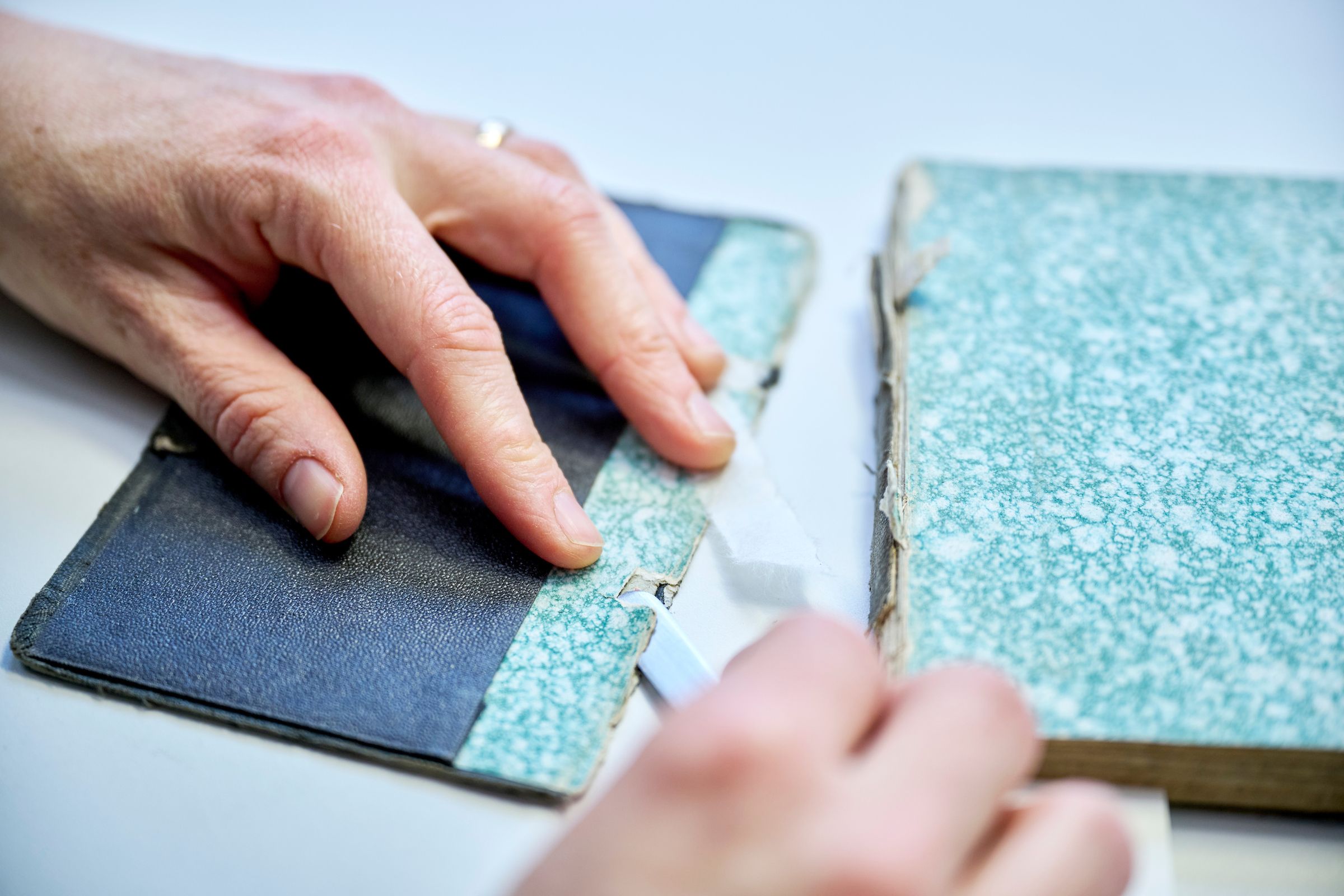
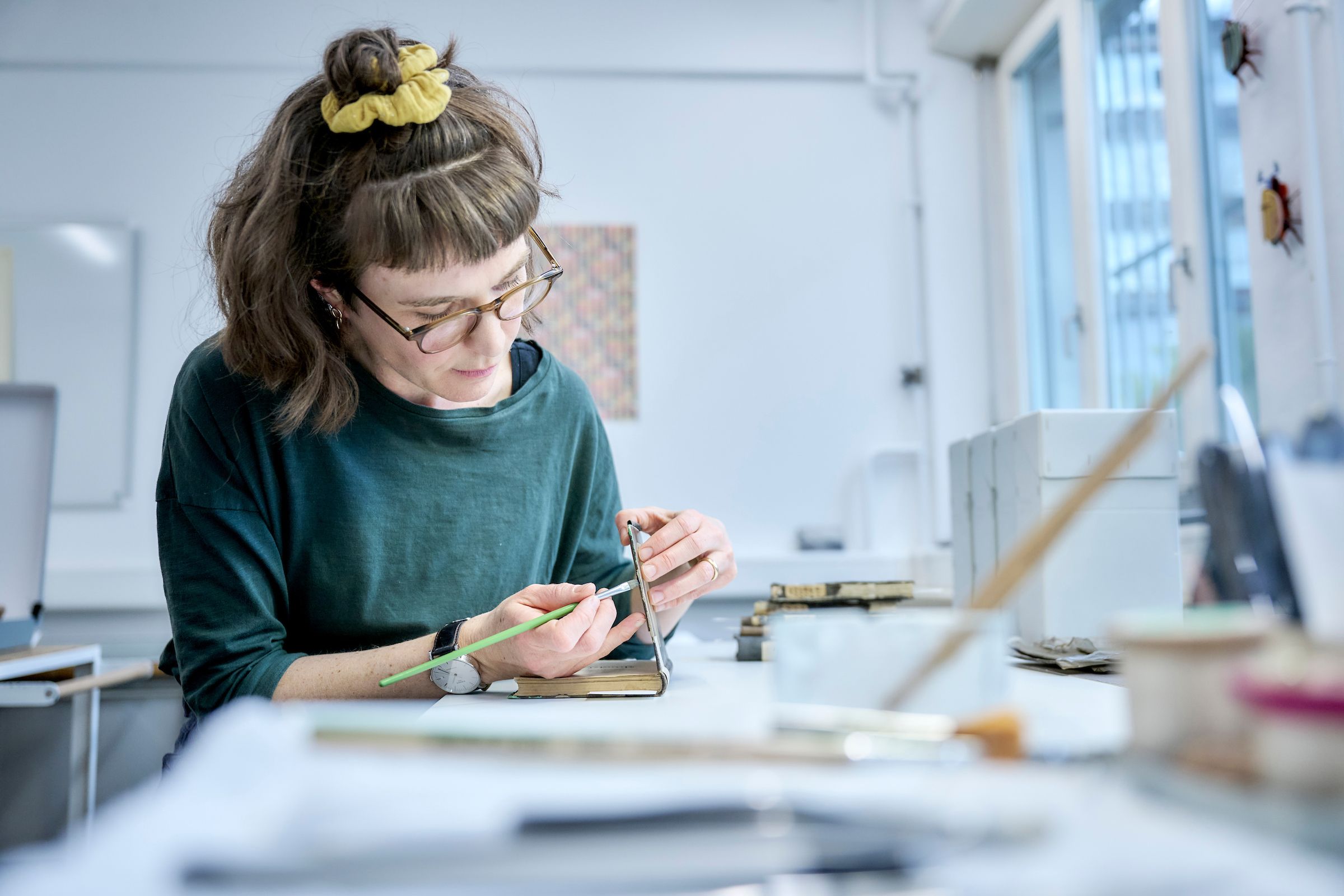
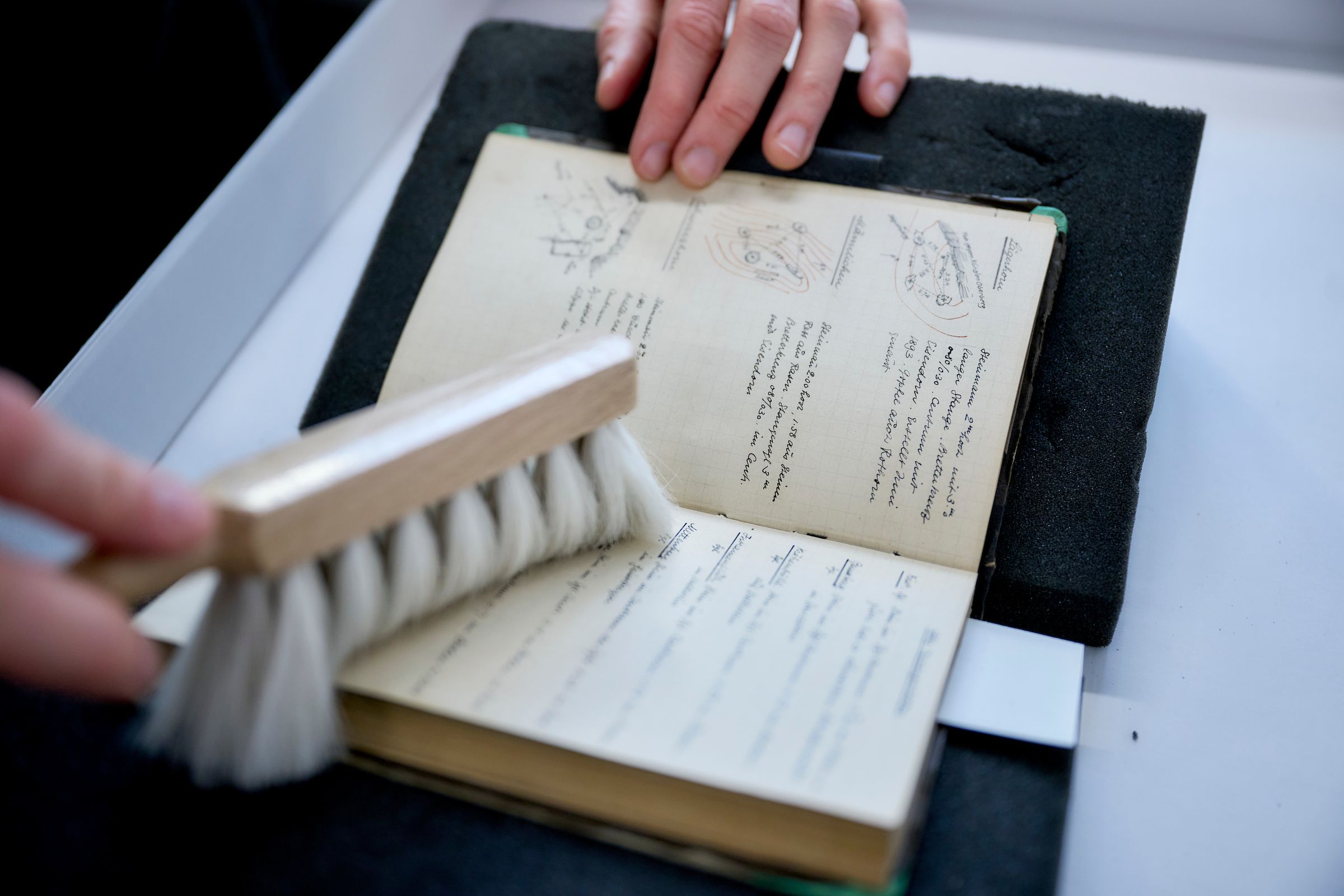
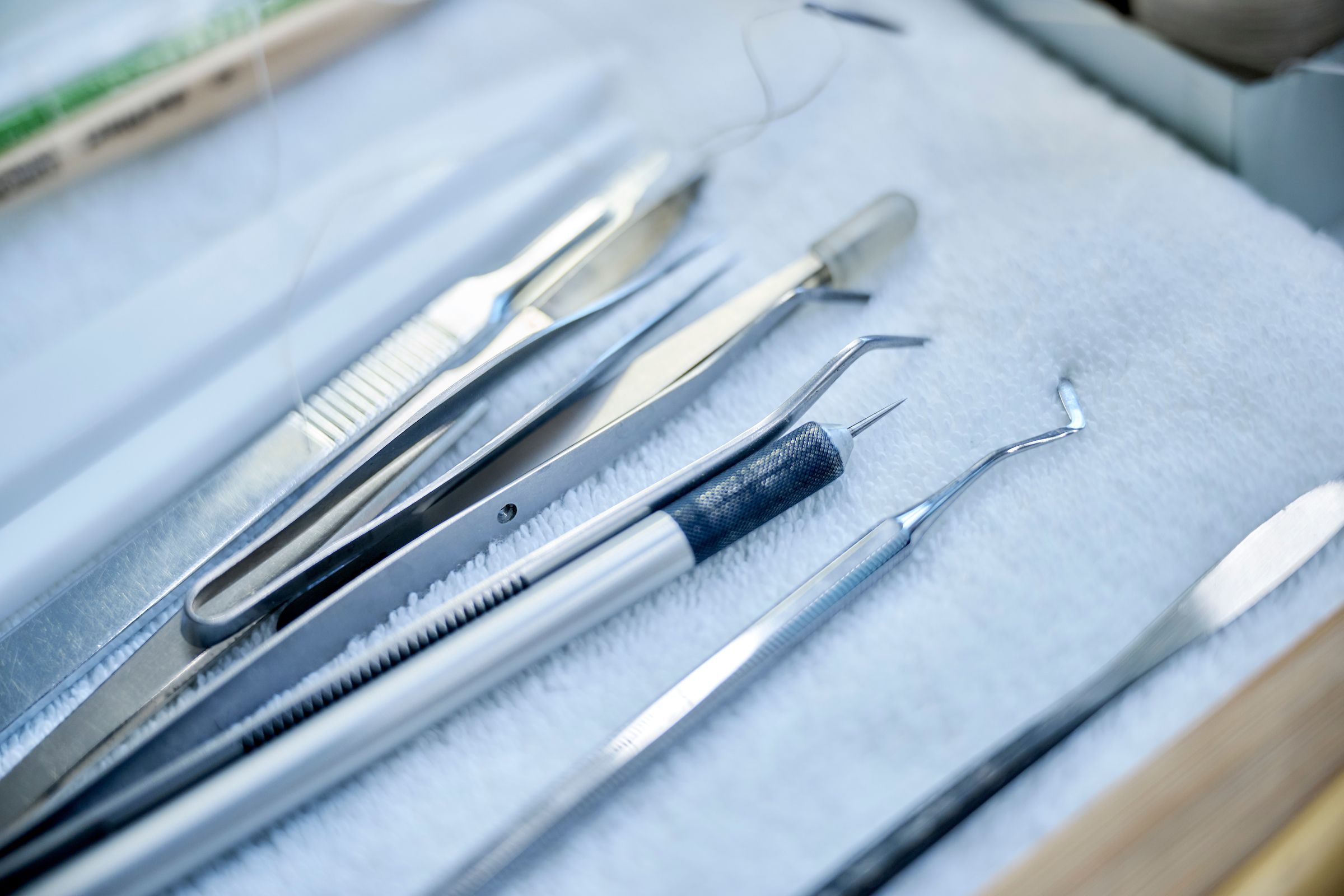
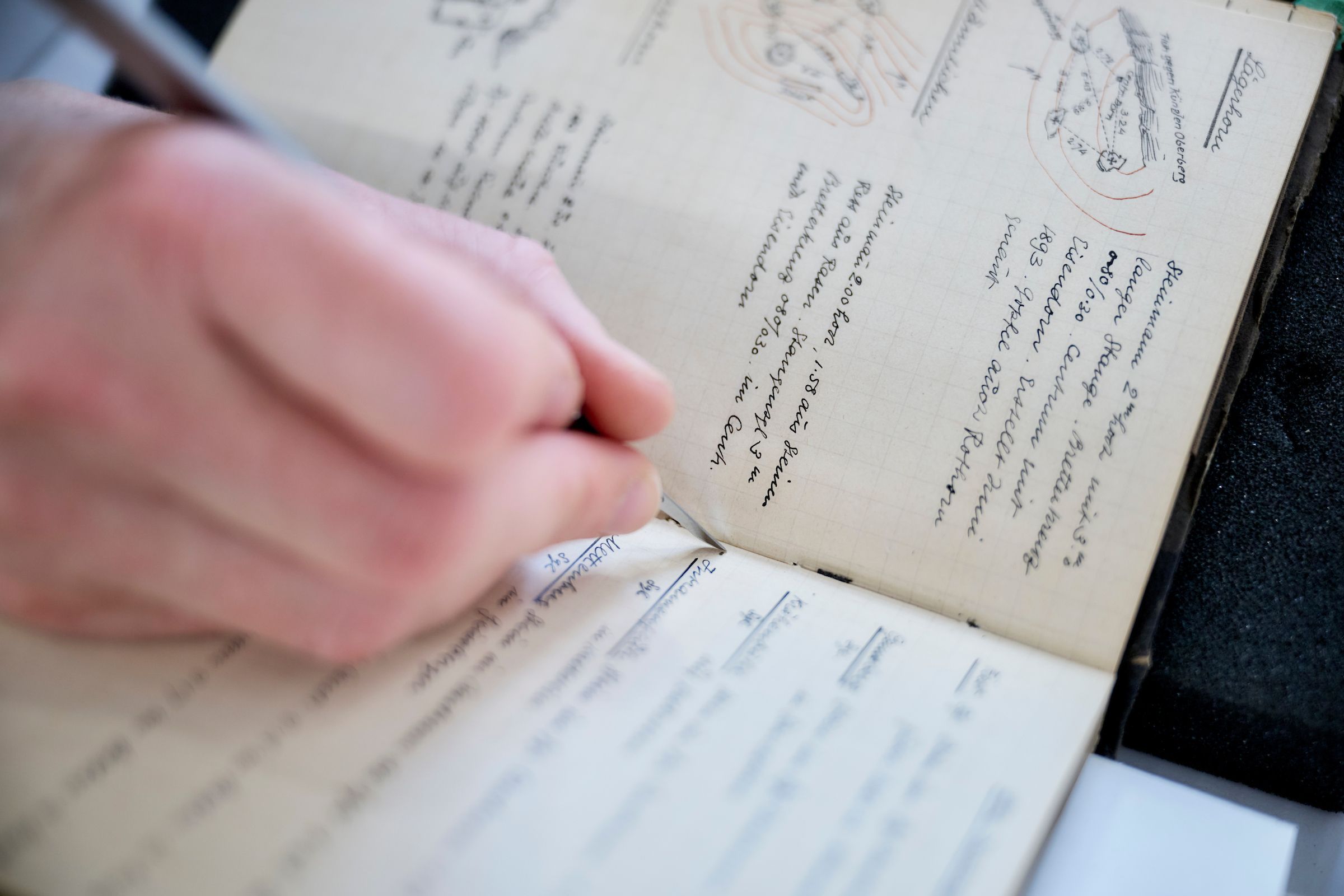
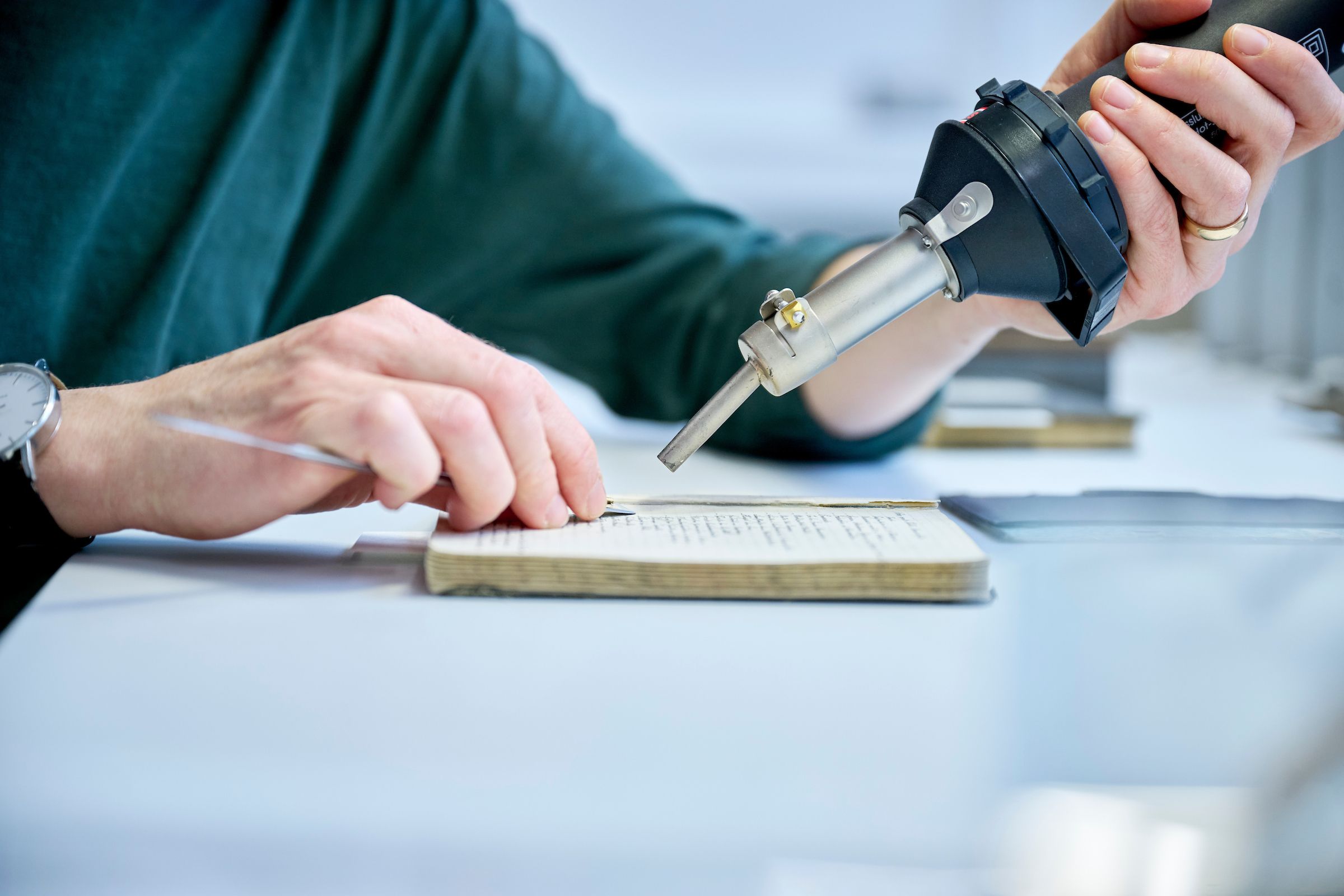
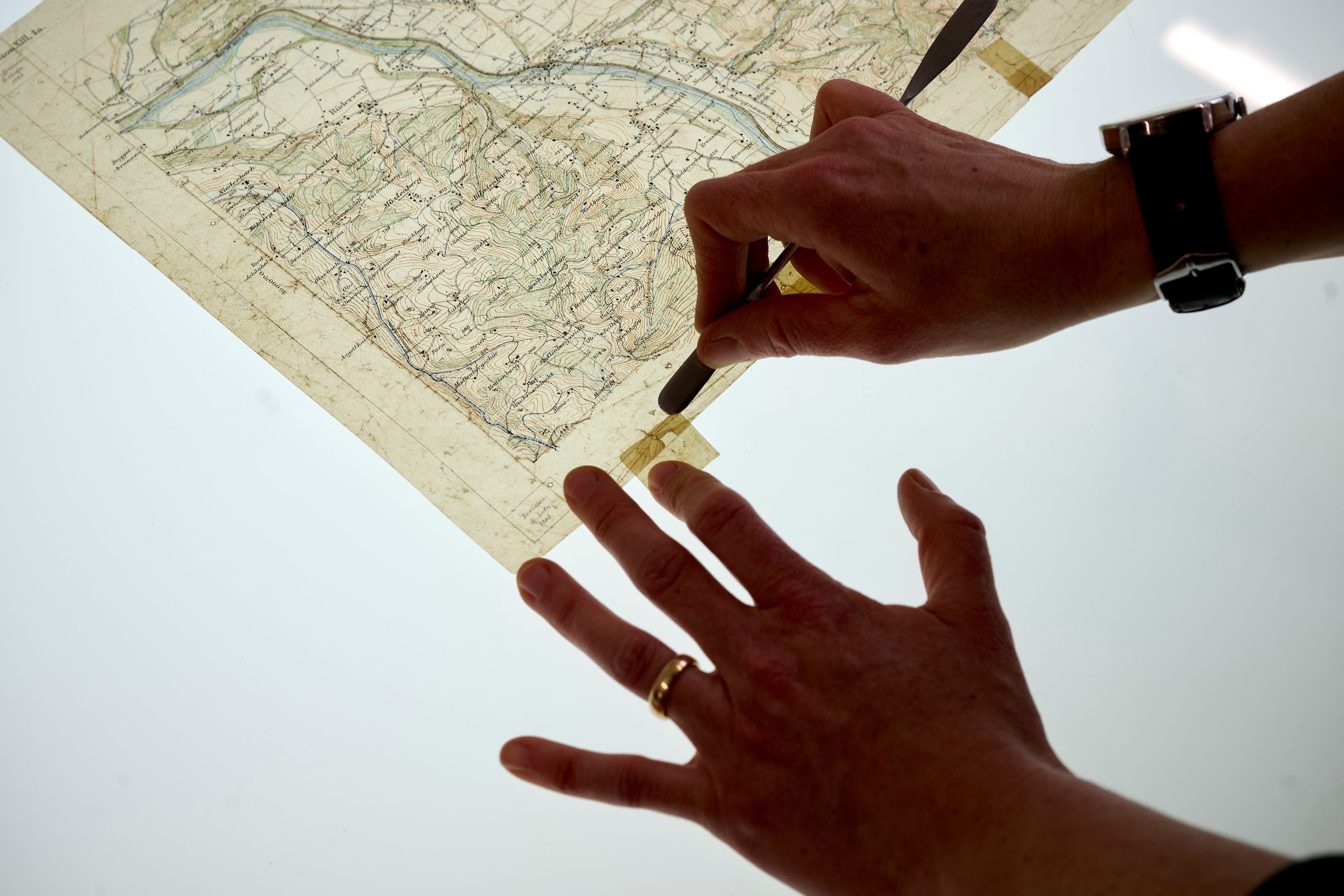
The methods she uses are proven and the processes are clearly defined. Otherwise, it’s all a question of dexterity and meticulousness. In every form of manual work, it is frequently experience that determines the choice of the best procedure. Lea Dauwalder is able to master the broad range of tools at her disposal. And over time she has also developed certain preferences: «I use my spatula every day. I picked it up at a flea market in Berlin and sharpened it myself. It’s my most versatile tool,» she adds with a smile. With her spatula, she carefully detaches and removes old strips of adhesive tape that had probably been used for repairing a torn page.
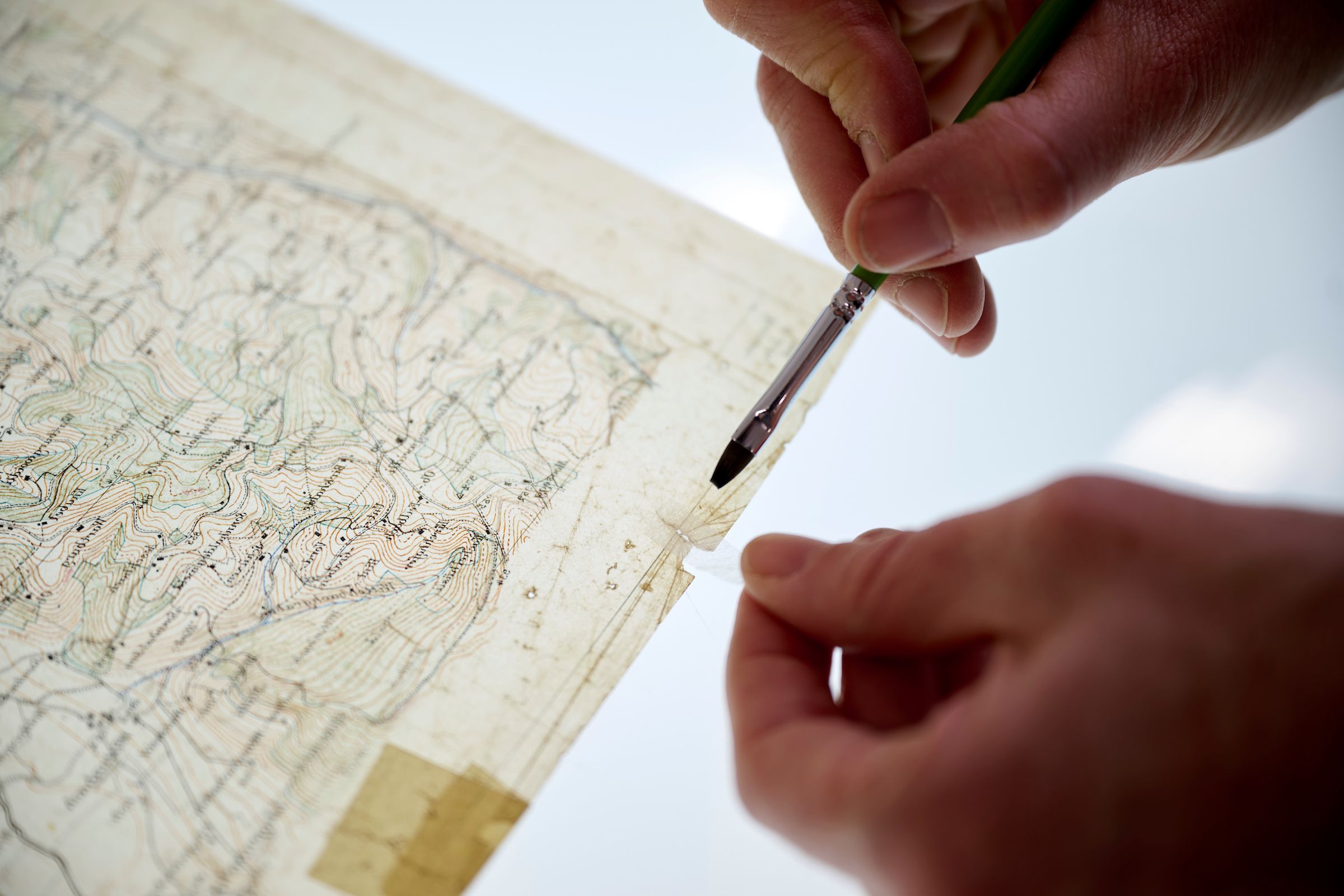
«Over time, the adhesive hardens and could consequently cause additional damage,» she explains. But the fact that the adhesive can also penetrate into the paper is an even greater problem. It gradually decomposes and the residue causes chemical damage to the paper. This is a problem she frequently encounters during her restoration of maps.
Making her own adhesives
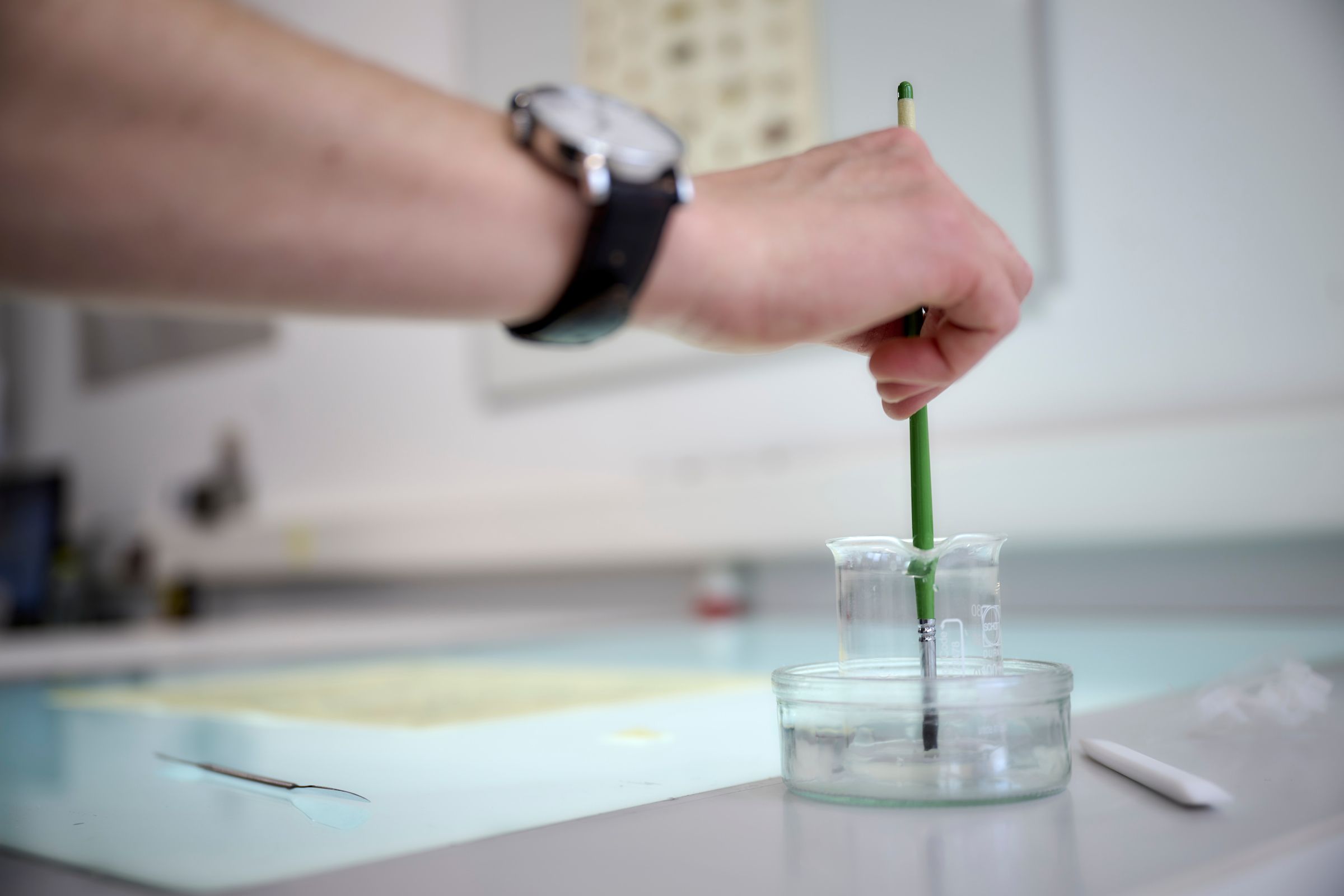
«With historical maps, every time they are used there is a risk that the damage could be worsened. This means that restoration work has to be carried out before they can be used. For this purpose I use specific adhesives,» she explains, as she switches on the backlit table on which she places a handdrawn map on transparent paper. «For this type of paper, I use an adhesive prepared from the swim bladder of a sturgeon. It is extremely strong while remaining flexible.» Its preparation is time-consuming: the flakes have to be left in water for a considerable length of time so that they can become rehydrated. The mixture then has to be heated for several hours before it is ready for use. She picks up a strip of Japanese paper and places it over the torn section, then uses a brush to sparingly apply the adhesive. She then covers the repaired section with a polyester film, a blotter and a piece of cardboard, and adds a lead weight: «This ensures that the paper will not warp as it dries,» she says.
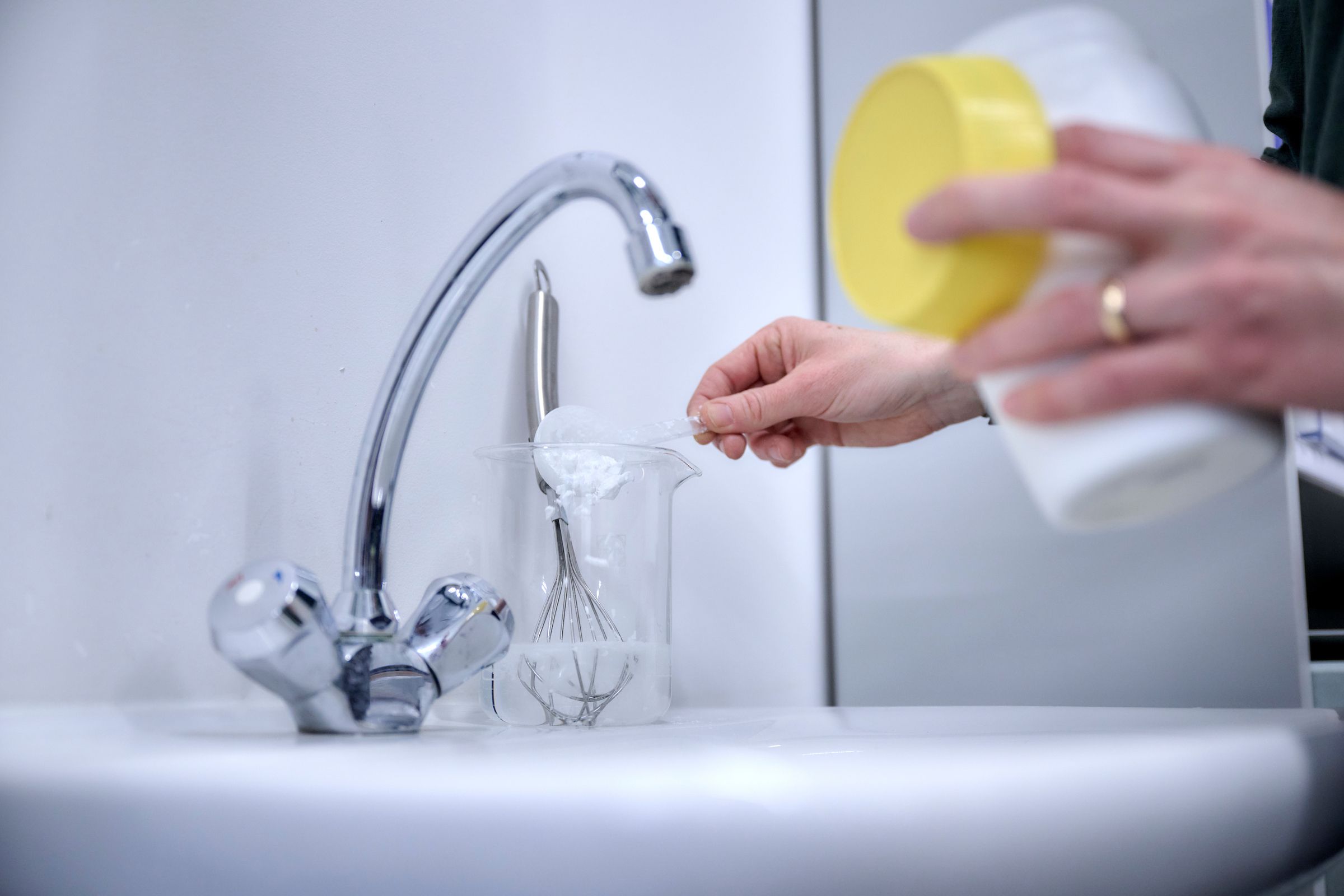
According to Lea Dauwalder, making her own adhesives is an exact science. She most frequently prepares an adhesive made of wheat starch. While she scrupulously observes the necessary quantities and temperatures, she relies above all on her instinct. «The adhesive behaves differently, depending on the weather or the dish I use for its preparation.»
Assuring permanent availability
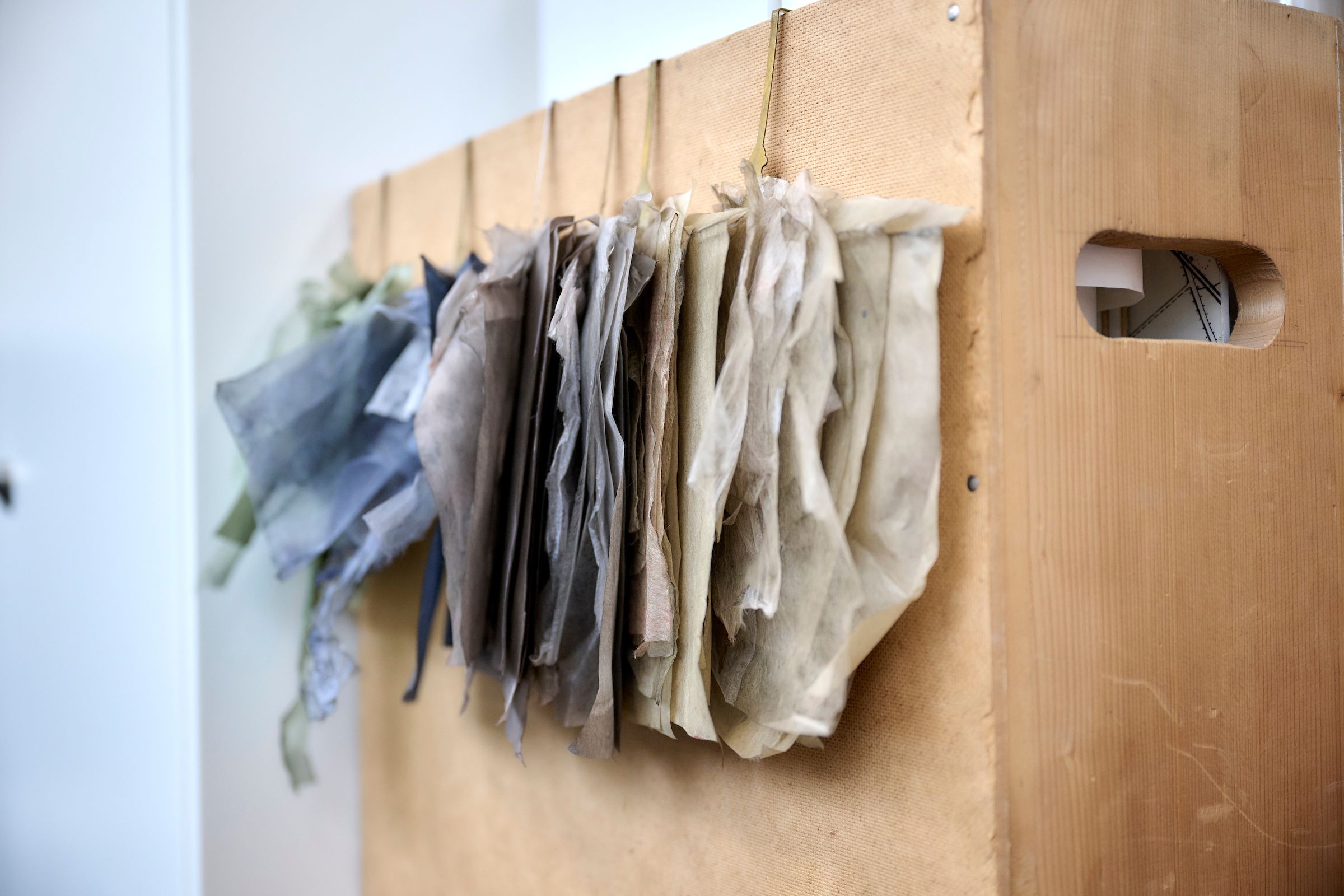
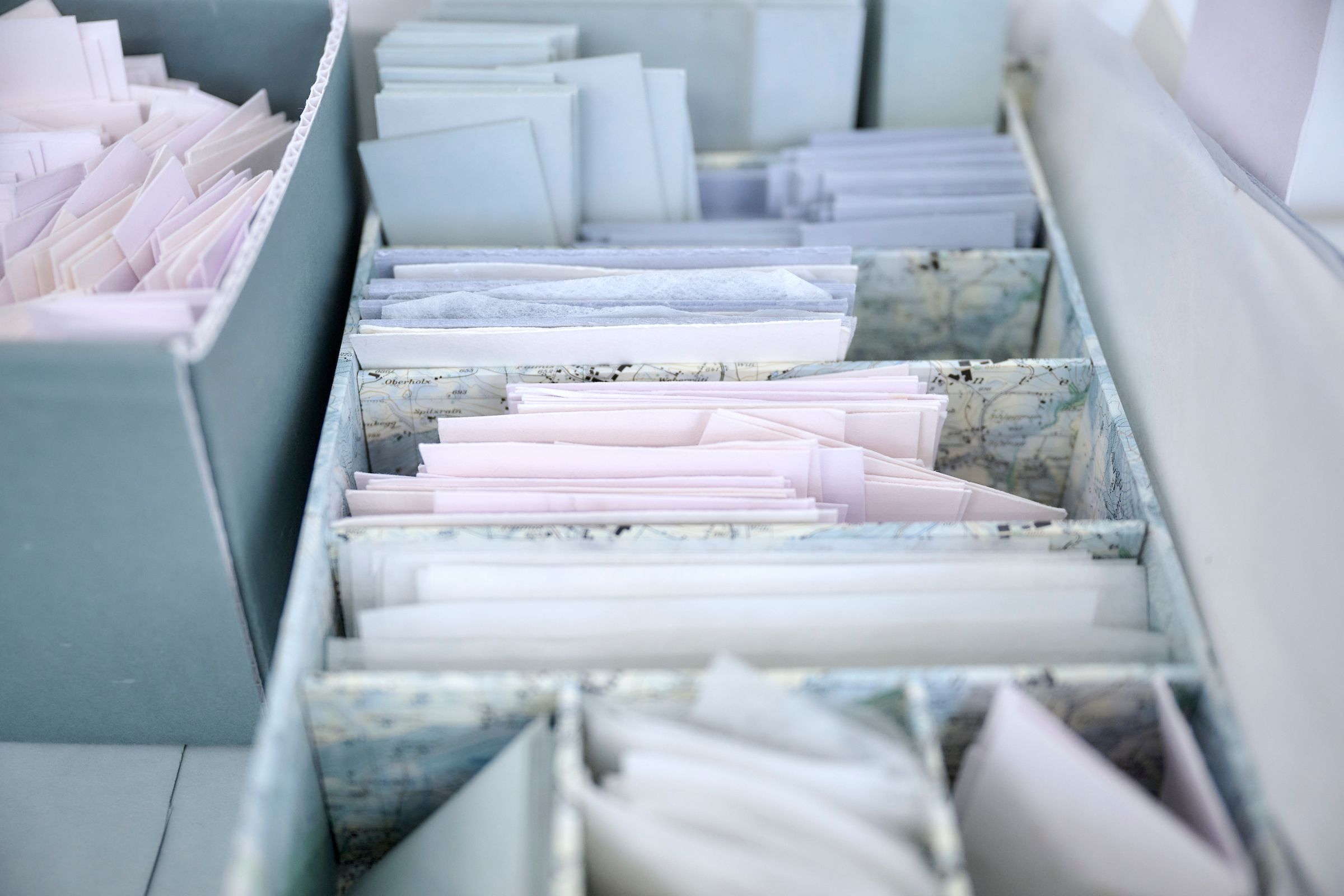
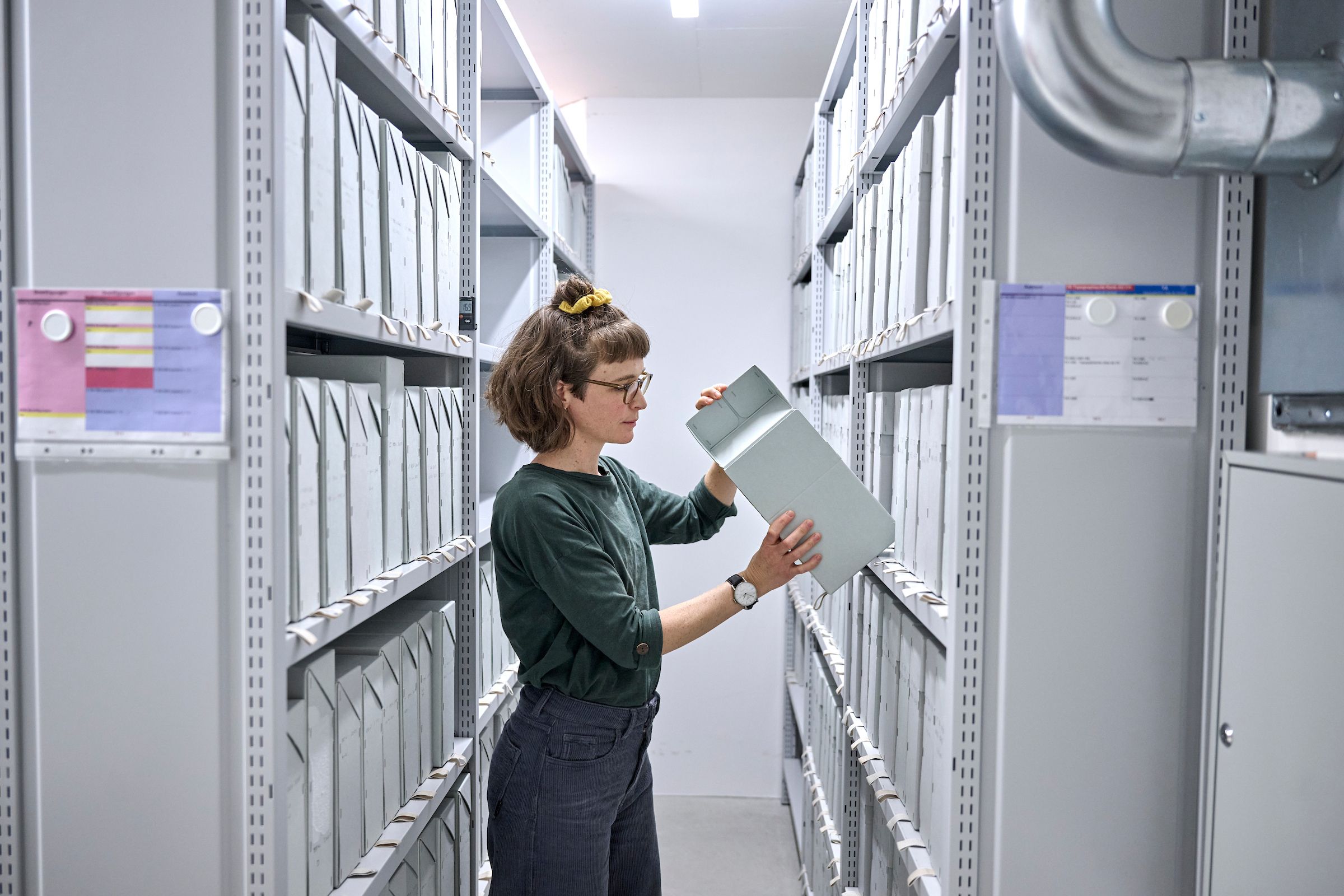
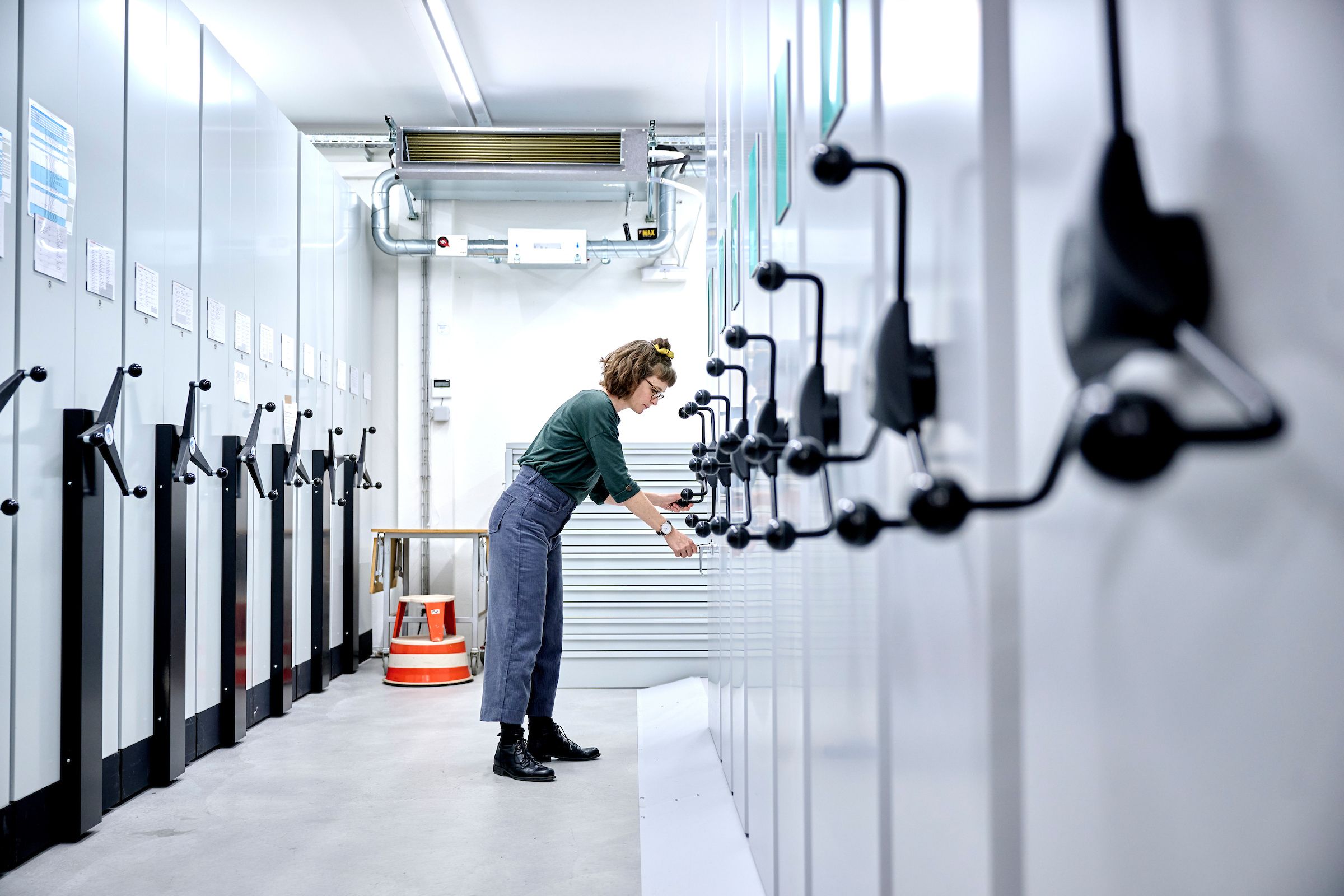
Once an item has been restored, it has to be correctly archived. Today, the map collection is stored in two rooms that provide the required conditions for their conservation. But archiving poses a variety of challenges: “We have to take account of numerous parameters. The collection has to be kept in a controlled environment with the appropriate degree of humidity and which ensures that all harmful influences such as dust, light, pollutants and vermin can be avoided.” The items are stowed in special boxes and folders that are resistant to ageing.
We have to make sure that the history of each object remains discernible.
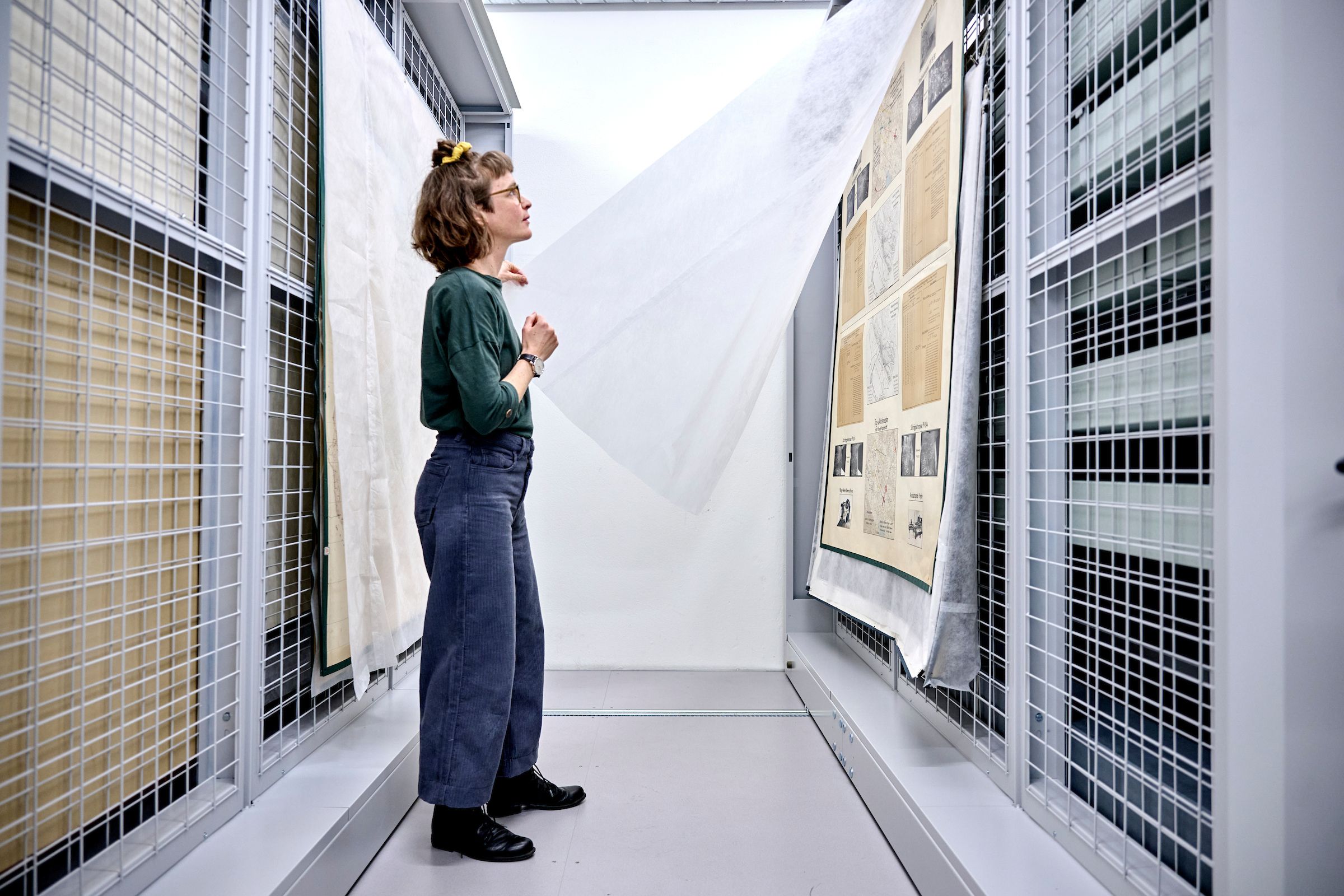
Lea Dauwalder has also contributed towards the application of methods adapted for the archiving of large items. «Before 2022, large maps were kept in the attic. This meant that access was difficult and the maps were stored in unsuitable conditions.» Today, thanks to the new concept, these large items are now kept in swisstopo’s administrative archives. The archives are a living memory both for swisstopo and its forward-looking strategies, and for the general public and their knowledge of the territory.
.jpg?auto=format)
Map collection
Lea Dauwalder studied conservation and restoration at Bern University of the Arts. She works in swisstopo’s Topography division, where she specialises in the distribution of geodata and analogue collections. She is a member of a team of three specialists who restored and conserved almost 900 items in the course of 2023.
Découvrez comment une carte rejoint la collection cartographique de swisstopo

Historical maps
The swisstopo map collection is a unique cultural treasure comprising all first editions and revised versions of the official Dufour Map, the Siegfried Map and the series of national maps. The collection also contains a variety of documents, including handwritten items. All editions of the maps produced in analogue form can now be obtained in digital form or conveniently viewed chronologically in swisstopo’s map viewer.

Historical Maps
Get to know Switzerland's historical heritage with the original Siegfried and Dufour maps or old national maps; or visualised impressively on modern maps, too.
Complementary content
Focus on women
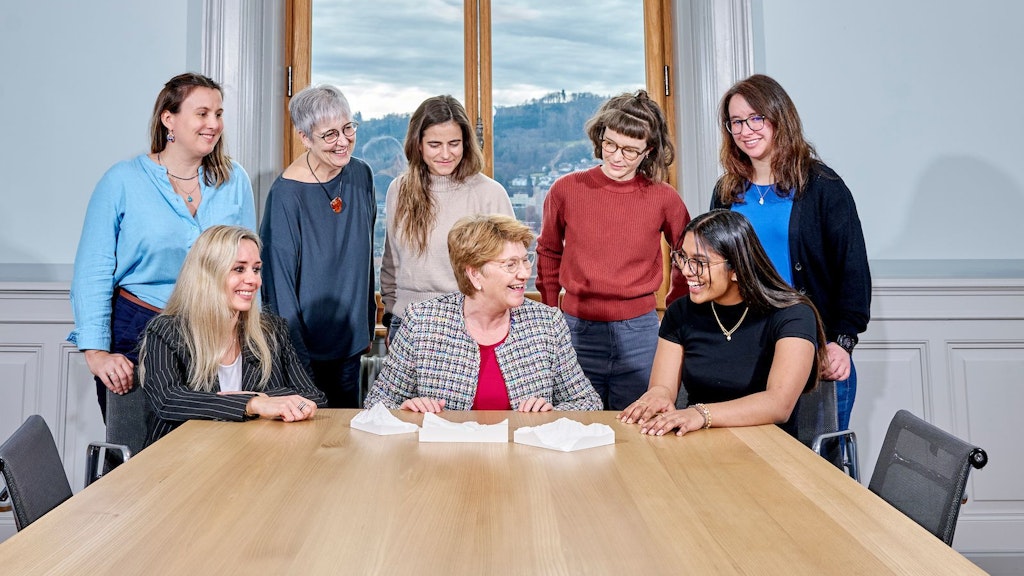
Women have been working in technical professions, geoinformatics and, namely, the field of geoinformation for a long time now. So we choose to turn our attention to the women in our federal office.
Federal Office of Topography swisstopo
Seftigenstrasse 264
3084 Wabern