

Examples of best practices
Users can already take advantage of the first features of Transportation Network CH. An example of an implemented project:
Traffic management at major events

For more than a week, Zurich’s city centre and surrounding municipalities were the setting for the 2024 UCI Road and Para-Cycling Road World Championships. This resulted in several road closures. Cooperative traffic management based on the data provided by Transportation Network CH ensured that widely used navigation services were informed about the daily changing road closures and were able to offer alternative routes to people on the move. This significantly reduced the impact on road users and the feared traffic chaos was avoided.
Further information about the implemented solution
The basic network of Transportation Network CH has greatly simplified the publication of road closures. Thanks to this data basis, the closures could be mapped very accurately and efficiently.

Possible applications for the future
Transportation Network CH is being continuously developed and, with each new tool, users will have further opportunities to link their own transport and mobility data even more efficiently with third-party data.
This third-party data comes from the users themselves, from authorities, organisations or private companies that voluntarily release their transport and mobility data for public use. The more people do this, the wider the application possibilities become. Here are some examples of how this data could be used in the future:

To ensure that emergency services can reach the scene of an emergency quickly, they need special information: Is the road wide enough or the bridge high enough for our vehicles? Are there any weight restrictions? Does a site have special access routes for the fire brigade? Where is there currently heavy traffic or construction sites?
With the Transportation Network CH tools, they will be able to link such information from different sources in the future to create applications for their deployment routings.

If you do not travel by car, you will often need several mobility services to make your journey from A to B, e.g. bus, train and tram, sometimes supplemented by a rental car, rental bicycle, e-scooter or taxi. The better the accessibility and combinability of the data on these services, the more efficiently end users can plan their routes – according to the criteria that are important to them.
Thanks to Transportation Network CH and the MODI mobility data infrastructure, it will be much easier to access and combine information from different mobility providers in the future. The more of them provide their data, the better the data basis for app developers. They will be able to link the data with the Transportation Network CH tools and thus create smarter solutions.
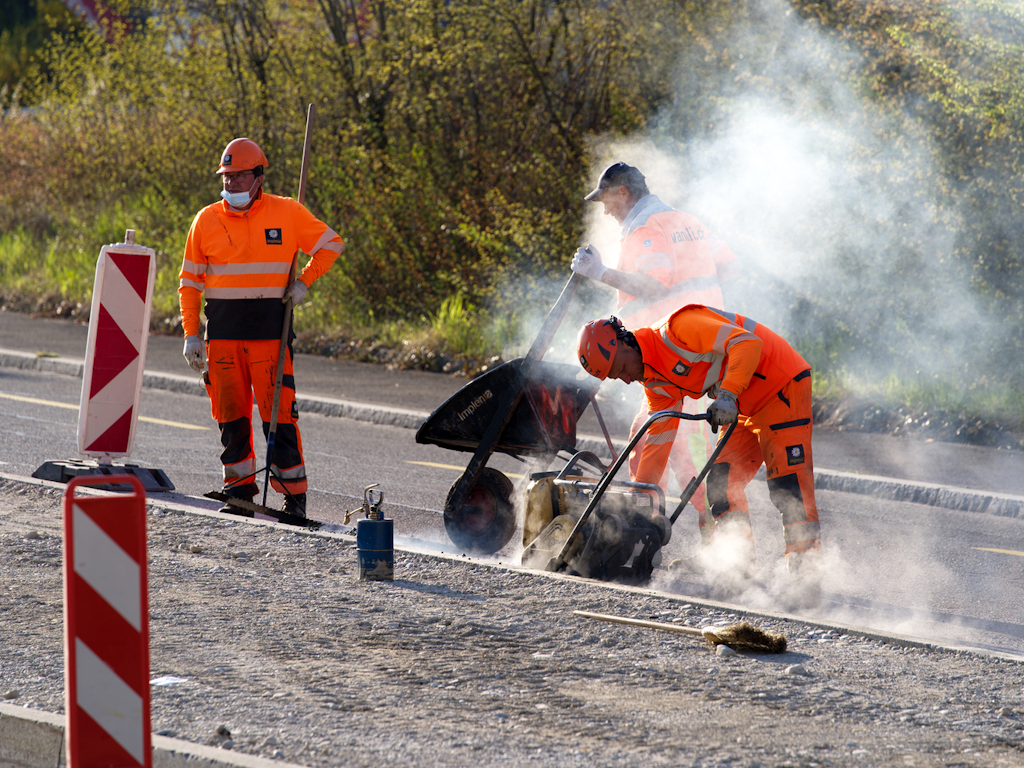
Planning and coordinating the construction, operation and maintenance of roads and railways is often complex. In order to keep traffic disturbances to a minimum, uniform data that is available to all parties involved is needed. This includes information on the current status, planned work, the exact route and capacity of the infrastructure. Expected restrictions can also be derived from this and diversions planned. With the help of Transportation Network CH and MODI, the federal government, cantons, municipalities, public transport companies and private individuals will be able to exchange and combine this data more easily in the future.

The search for a parking space often leads to traffic disturbances in city centres and residential areas. With the right combination of data, applications can be created that show drivers free parking spaces directly in their navigation system. In addition, they could check in advance how large the parking space is, what it costs, reserve it if necessary and navigate there directly, for example. This can also help logistics companies, for example, to plan deliveries better. Information from parking guidance systems, multi-storey car park operators and parking space owners could be used as a data basis if they make it freely available. The data can then be linked using the tools provided by Transportation Network CH.
More ideas for use cases?
Do you have other ideas for using Transportation Network CH? Please contact our project team: vnch@swisstopo.ch
Transportation Network CH in detail

Transportation Network CH
A brief overview, added value, target groups and answers to the most frequently asked questions

How does Transportation Network CH work?
Details on data combinations, specialised Networks and the basic Network

Tools and functions
Tools for adding and combining transport network data
Federal Office of Topography swisstopo
Seftigenstrasse 264
3084 Wabern
If you are interested in Transportation Network CH, have specific questions about its use, would like to provide feedback, or have ideas for a specific application, please contact our project team: